
November 15, 2024
Humans and AI: Shaping the Future of Work, Healthcare, and Society by 2030
Ms. Ambi Alex

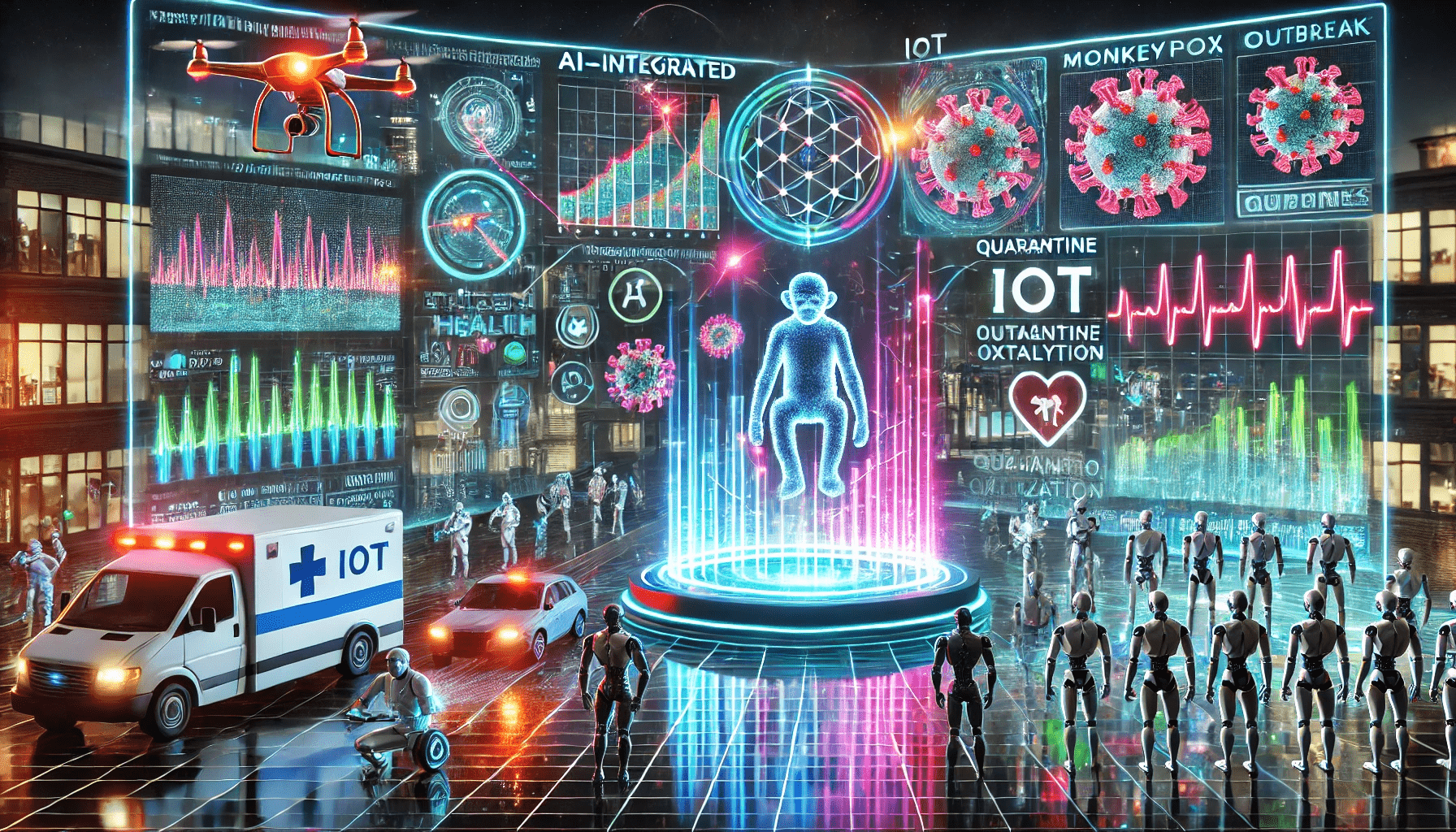
Recent outbreaks of monkeypox have triggered global health concerns, prompting experts to explore innovative ways to manage and control its spread. One promising solution lies in the use of Internet of Things (IoT) technology.
By enabling real-time monitoring, data collection, and efficient communication, IoT is reshaping the landscape of public health.
Monkeypox, a zoonotic virus, shares many characteristics with smallpox but is generally less severe. The challenge lies in its ability to spread through direct contact, making swift identification and isolation of cases crucial. Traditional methods of tracking and response often lag, leading to delays in containment.
IoT technology creates a network of interconnected devices capable of capturing and sharing data in real-time. This capability can be harnessed to improve disease surveillance and outbreak management in several ways:
Wearable devices track vital signs like body temperature and pulse. Irregular readings trigger alerts to health authorities for timely intervention.
Mobile devices log interactions between people, essential for tracking exposure. IoT-enabled quarantine systems monitor isolation compliance.
Healthcare professionals supervise patients remotely, minimizing direct contact and reducing transmission risks during isolation.
IoT systems continuously gather health data for trend analysis and predictions, helping authorities allocate resources and plan interventions.
By allowing real-time health monitoring, facilitating faster interventions, and providing predictive insights, IoT has the potential to transform how we respond to outbreaks like monkeypox.
Despite its potential, implementing IoT solutions presents hurdles such as data privacy concerns, the need for reliable infrastructure, and financial costs. It’s essential to tackle these issues to foster trust and ensure the effective use of technology.
As we continue to navigate the complexities of infectious disease outbreaks, IoT technology presents a proactive and efficient solution. By allowing real-time health monitoring, facilitating faster interventions, and providing predictive insights, IoT has the potential to transform how we respond to outbreaks like monkeypox.
With continuous advancements and thoughtful implementation, IoT technology can help build a more resilient and responsive public health system, ready to tackle future challenges with greater efficiency and effectiveness.
Dr. Mohammed Alshekly
Gulf University
Last Updated: 09 Apr 2026