March 31, 2026
Artificial Intelligence in Human Resource Management
Dr. Ali Ateeq

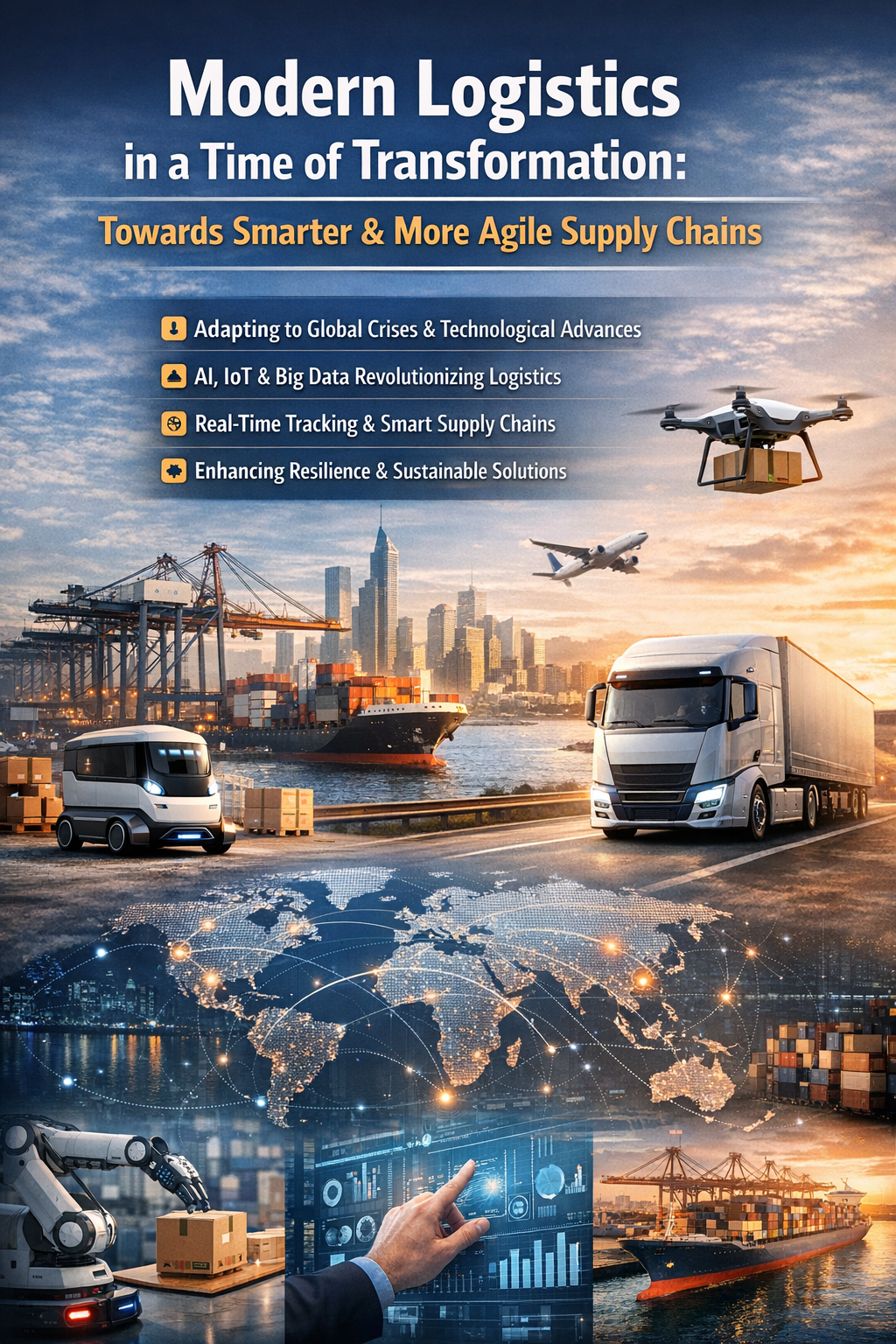
Explore how modern logistics and smart supply chains are evolving through digital transformation, AI, and global disruptions. Discover insights on building resilient, sustainable, and technology-driven logistics systems for the future.
Modern logistics has undergone profound transformations in recent years, driven by rapid global changes, including geopolitical crises, economic fluctuations, health challenges, and remarkable advancements in digital technology. Collectively, these developments have reshaped the traditional concept of supply chains, making them more complex on one hand and increasingly dependent on innovation and digitalization on the other.
In this context, logistics is no longer limited to transportation and warehousing activities. It has evolved into an integrated system that relies on data management, risk forecasting, and real-time decision-making. Technologies such as artificial intelligence, the Internet of Things (IoT), and big data analytics have emerged as essential components in enhancing operational efficiency and improving responsiveness to constantly changing global demand.
One of the most significant shifts in this field is the transition from traditional supply chains to what is now known as “smart supply chains.” In these systems, digital technologies are used to track shipments in real time, optimize transportation routes, and reduce operational costs. It has also become possible to forecast future demand with a high degree of accuracy, helping organizations minimize waste and improve inventory management.
Recent global events, such as disruptions in international trade, energy crises, and tensions in key maritime corridors, have revealed the vulnerability of traditional logistics models and highlighted the need for more flexible and adaptive systems. These challenges have pushed organizations to redesign their logistics strategies by diversifying supply sources, strengthening local production, and adopting “nearshoring” models.
Digital transformation has also played a pivotal role in ensuring operational continuity. Digital supply chain management platforms have significantly improved coordination among suppliers, distributors, and customers. Furthermore, the use of robotics in warehouses, autonomous vehicles in transportation, and drones in delivery services has become part of a new reality that is redefining logistics efficiency.
In the Gulf region, including the Kingdom of Bahrain, the logistics sector is gaining increasing importance as a key driver of economic diversification away from oil dependency. The region’s strategic geographic location has strengthened its role as a global logistics hub connecting Asia, Europe, and Africa, making investment in smart infrastructure and integrated transport systems essential for achieving future economic visions.
From a sustainability perspective, the focus is no longer solely on speed and efficiency but also includes reducing carbon emissions, adopting environmentally friendly transport solutions, and improving energy efficiency in warehouses. This shift reflects a global movement toward green logistics that supports sustainable development goals.
In conclusion, modern logistics is undergoing a comprehensive restructuring driven by global events and technological advancements. Success in this field no longer depends only on operational capability, but also on system flexibility, analytical intelligence, and the ability to adapt quickly to change.
The future is moving toward smarter and more sustainable logistics capable of supporting the global economy in an environment filled with both challenges and opportunities. Ultimately, organizations that embrace digital transformation and flexible logistics models will be better positioned to thrive in an increasingly complex and dynamic global environment.
Dr. Qais Almaamari
Gulf University
Last Updated: 09 Apr 2026