March 30, 2026
Will AI Replace the Professor? Rethinking the Role of Human Educators in Higher Education
Assoc. Prof. Dr. Mohammed N. Abdulrazaq Alshekhly

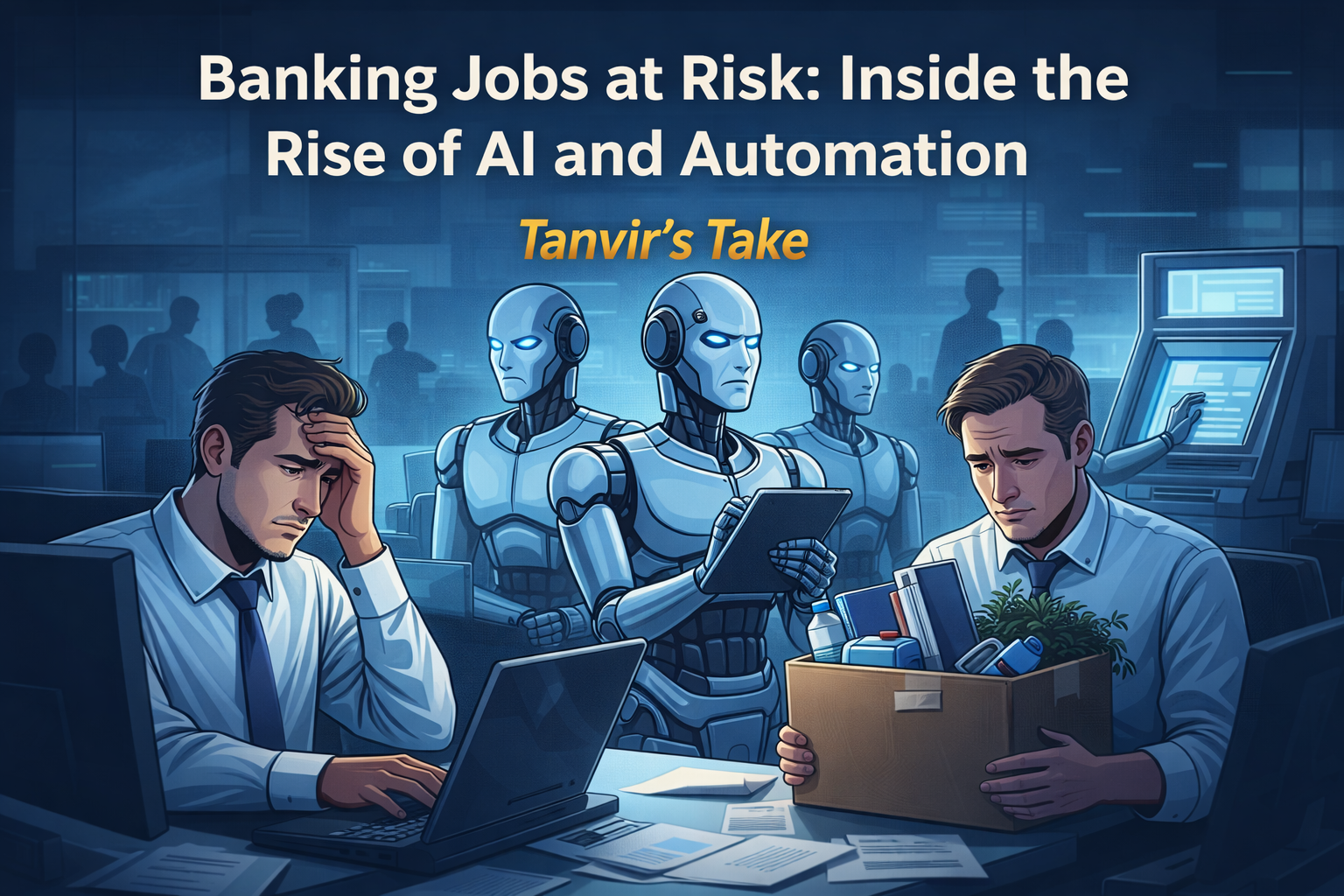
AI in banking is rapidly transforming jobs and redefining the workforce. Discover how automation and digital employees are reshaping careers and the future of work.
Let me tell you something that sounds straight out of a sci-fi movie. At one of the oldest banks in the world, new “employees” have joined the workforce. They don’t sleep, they don’t complain, they don’t take vacations—and most importantly, they don’t get paid. These aren’t overworked humans—they’re AI systems.
Quietly and efficiently, these digital employees are taking over tasks that once required entire teams. At BNY (Bank of New York), these systems are already handling trillions of dollars in transactions every single day, sitting in on meetings, assisting with decision-making, and executing operations with a level of speed and precision no human can match.
Imagine walking into work one day and realizing your new teammate isn’t a person—but software. At BNY, this is already part of everyday reality. These systems are called “digital employees,” a name that feels friendly on the surface but hides just how powerful they really are. They don’t just assist—they actively perform tasks that humans used to handle, from moving trillions of dollars every day to sitting in meetings and managing complex operations behind the scenes.
Here’s where things start to feel a little uncomfortable. There are no big announcements, no breaking news headlines screaming about mass layoffs—just a slow, almost invisible shift happening in the background. The numbers quietly change over time: the workforce shrinks by thousands, six out of ten repetitive tasks are handed over to AI, and entire roles begin to fade without anyone making a scene about it.
Why would a bank do all this? Strip away the buzzwords and the answer becomes clear. Money. Efficiency. Scale. The Bank of New York Mellon isn’t investing nearly $4 trillion in technology just for the sake of being modern; it’s making a calculated move toward a more profitable future. Machines are cheaper than people, they don’t make costly mistakes, and they can operate at speeds no human team can match.
Every transformation has a face—and in this case, it’s called ELIZA. Nearly every employee—about 99%—uses ELIZA in some form, and it now powers around 70% of internal processes. Tasks that once took hours of focused human effort can now be completed in minutes, sometimes reducing a seven-hour workload to just thirty minutes.
But it also raises a subtle, lingering question: if AI can do your job faster, more efficiently, and without fatigue—where does that leave you? If one person can now do the work of five, what happens to the other four?
Here’s the part that most people feel—but rarely say out loud. Employees aren’t just using AI—they’re training it. Every time someone automates a workflow, optimizes a process, or feeds data into the system, they’re not just improving efficiency—they’re teaching the machine how to do their job better. It’s like writing your own replacement manual—in real time.
What we’re witnessing isn’t a sudden collapse of employment, but a steady transformation of what work actually looks like. Routine, repetitive tasks are quickly being handed over to machines. The jobs that remain are becoming more technical, requiring a deeper understanding of systems, data, and technology. And perhaps most importantly, job security is no longer as predictable as it once was.
The future isn’t humans vs AI. It’s humans who understand AI vs humans who don’t.
Let’s cut through the corporate fluff for a moment. AI isn’t here just to “assist” or make work slightly easier—it’s here to optimize everything. Behind closed doors, banks aren’t really asking, “How can we help employees work better?” The real question driving decisions is much more direct: “How can we get the same work done with fewer people?”
What’s happening at BNY isn’t just a one-off transformation—it’s a glimpse into the future unfolding right in front of us. A future where entire industries evolve faster than expected, where job roles continuously shift to keep up with technology, and where change is no longer gradual but constant and accelerating.
The real question isn’t: “Will AI take jobs?” It’s: “Are you adapting fast enough?”
If there’s one takeaway from this—learn how to work with AI, before it learns to work without you.
Dr. Tanvir Hussein
Gulf University
Last Updated: 09 Apr 2026