March 31, 2026
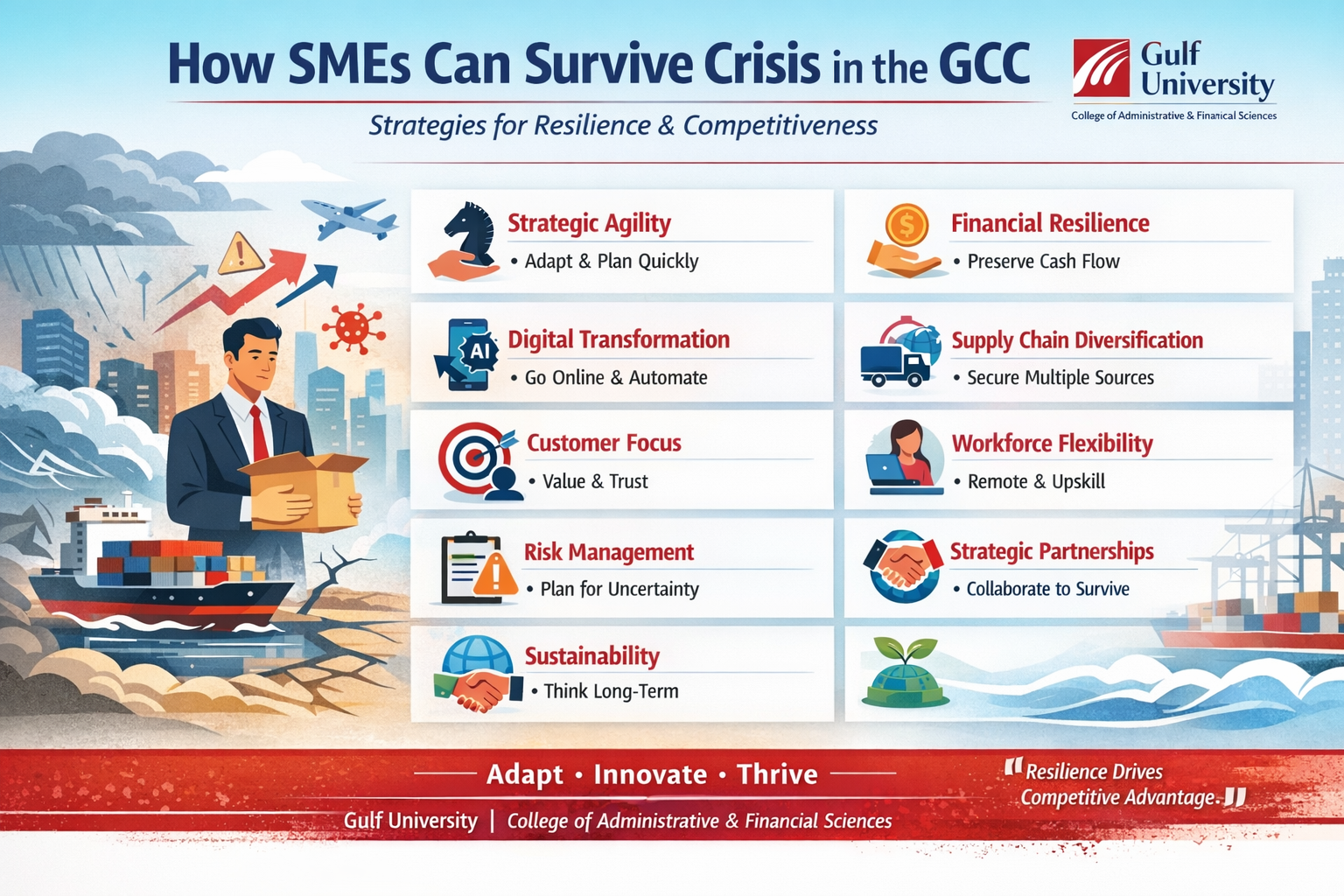
How SMEs Can Survive Crisis in the GCC: A Strategic Perspective for Resilience and Growth
Dr. Siddig Balal Ibrahim


Explore how artificial intelligence is reshaping human resource management, enhancing recruitment, performance development, and strategic decision-making toward a sustainable future.
Human Resource Management (HRM) is undergoing fundamental transformations in the modern era as a result of the rapid advancement of artificial intelligence (AI) and digital transformation. Traditional HR practices are no longer sufficient to meet the demands of dynamic and rapidly changing work environments. In this context, AI has emerged as a powerful tool reshaping the future of human capital management by enhancing efficiency, improving decision-making, and strengthening the overall employee experience.
The integration of AI into HR functions reflects a strategic shift in the nature of this field. HR is no longer limited to administrative and routine tasks; instead, it increasingly relies on data-driven insights, predictive analytics, and evidence-based decision-making. Machine learning technologies and intelligent systems have significantly improved recruitment processes by increasing the accuracy of candidate selection, reducing human bias, and accelerating screening and evaluation procedures.
Moreover, AI has become a vital tool in performance development, enabling organizations to design personalized training and development programs based on individual employee needs and performance levels. It also supports talent management by identifying skill gaps and developing more precise and effective individual development plans.
In the context of global economic and technological transformation, many countries, including the Kingdom of Bahrain, are actively pursuing digital transformation initiatives and building knowledge-based, innovation-driven economies. The application of AI in HRM is considered a key pillar in achieving this vision, as it enhances organizational efficiency in both public and private sectors and strengthens their readiness for the future.
This transformation also promotes stronger integration between academia and industry, as educational institutions and organizations increasingly collaborate to prepare a workforce capable of engaging with modern technologies. This is reflected in training initiatives and programs that emphasize innovation, problem-solving, and analytical thinking to meet the evolving demands of the labor market.
From a sustainability perspective, the role of AI in HRM extends beyond operational efficiency. It also contributes to improving fairness and transparency in decision-making, enhancing workplace environments, and increasing employee satisfaction. Furthermore, it supports the development of more flexible organizations capable of adapting to rapid changes in the global business environment.
The integration of artificial intelligence into human resource management represents a pivotal step toward redefining the field in a more intelligent and effective way. It combines technological innovation with strategic vision, paving the way for a sustainable future of human capital management based on knowledge, analytics, and continuous development.
Dr. Qais Almaamari
Gulf University
Last Updated: 09 Apr 2026
