March 31, 2026
From Finding Consumers to Being Found: Thriving in the Attention Economy
Dr. Siddig Balal Ibrahim

Learn how SMEs in the GCC can navigate crises through strategic agility, financial discipline, and digital transformation.
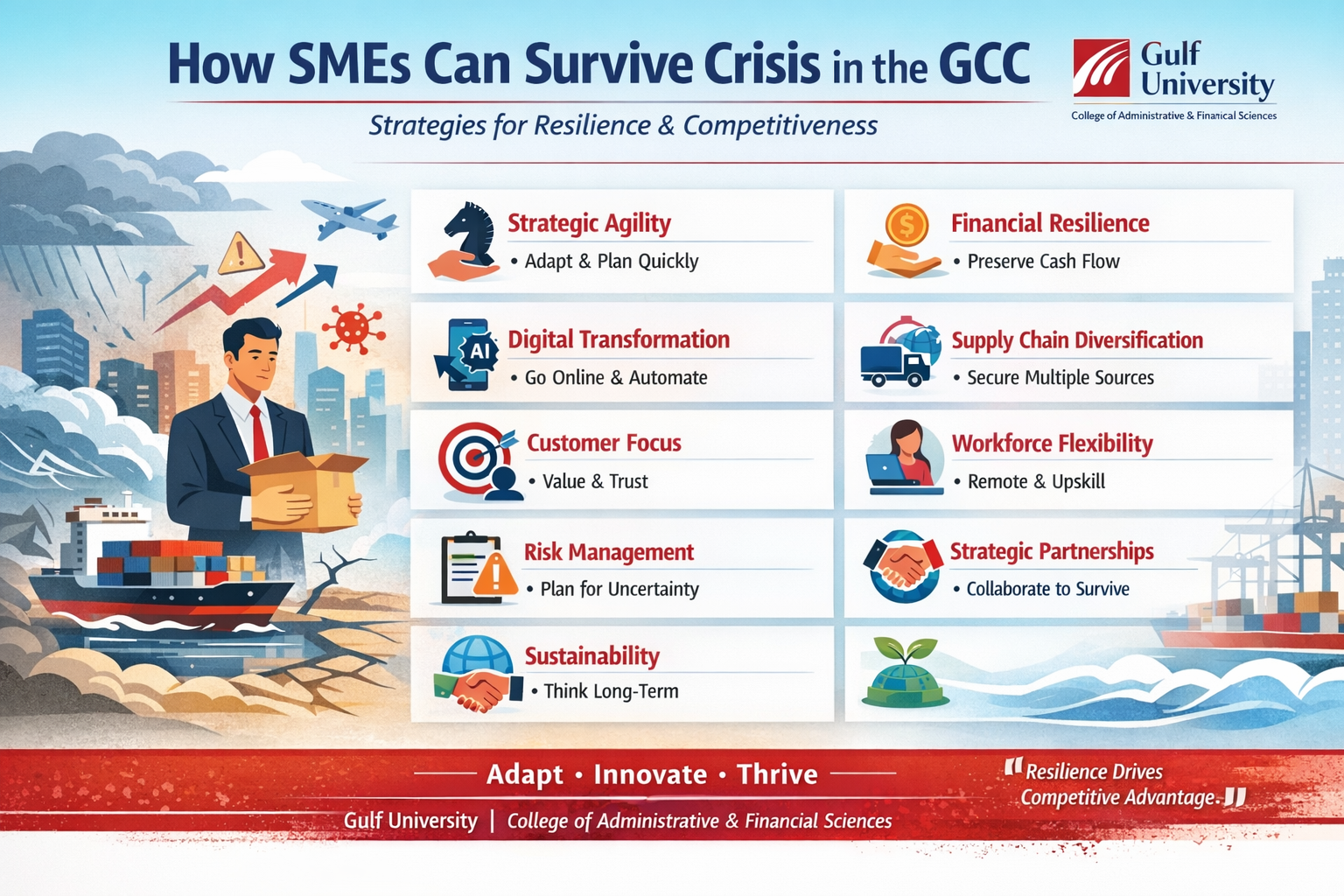
In times of geopolitical uncertainty, small and medium-sized enterprises (SMEs) across the Gulf Cooperation Council face significant challenges, including disrupted supply chains, fluctuating demand, and increasing financial pressure. However, businesses that adopt a proactive and flexible approach can not only survive but also strengthen their competitive position.
Rather than relying on rigid long-term plans, SMEs must continuously reassess their priorities, focus on essential products and services, and respond quickly to changing market conditions.
A key pillar of resilience is financial discipline. SMEs should prioritize cash flow management by reducing non-essential expenses, renegotiating payment terms, and identifying alternative revenue streams. Digital channels offer opportunities to maintain and even expand market reach during crises. Investing in digital transformation such as e-commerce platforms, data-driven decision-making, and cloud-based operations enables businesses to operate efficiently and remain accessible to customers despite external disruptions.
Operational resilience is equally critical. SMEs need to rethink their supply chain strategies by diversifying suppliers, reducing overdependence on specific regions, and strengthening local sourcing where possible. At the same time, adopting a customer-centric mindset—emphasizing value, affordability, and trust—helps businesses retain their existing customer base, which is often more critical than acquiring new customers during uncertain times.
Human capital also plays a central role in crisis management. SMEs should foster workforce flexibility by enabling remote work where feasible, investing in upskilling (especially digital skills), and maintaining transparent communication. Engaged and adaptable employees contribute significantly to organizational resilience and innovation.
SMEs must adopt proactive risk management practices. This involves identifying potential financial, operational, and geopolitical risks, developing scenario-based plans, and closely monitoring the external environment. Strategic partnerships further enhance resilience, as collaboration with other SMEs, government support programs, and academic institutions can provide access to resources, knowledge, and innovation.
Ultimately, crises serve as critical turning points. SMEs that embrace agility, digitalization, and strategic resilience are better positioned not only to withstand disruptions but also to capitalize on emerging opportunities.
Dr. Siddig Balal Ibrahim
Dean, College of Administrative and Financial Sciences, Gulf University
Last Updated: 09 Apr 2026