November 8, 2026
One Election, Two Markets: Why the Gulf Rallied While Wall Street Stumbled
Dr. Tanvir Mahmoud Hussein

FinTake Weekly from Gulf University (GU) reviews global, GCC, Bahrain, commodities, and currency market trends for the week ending November 13, 2026.
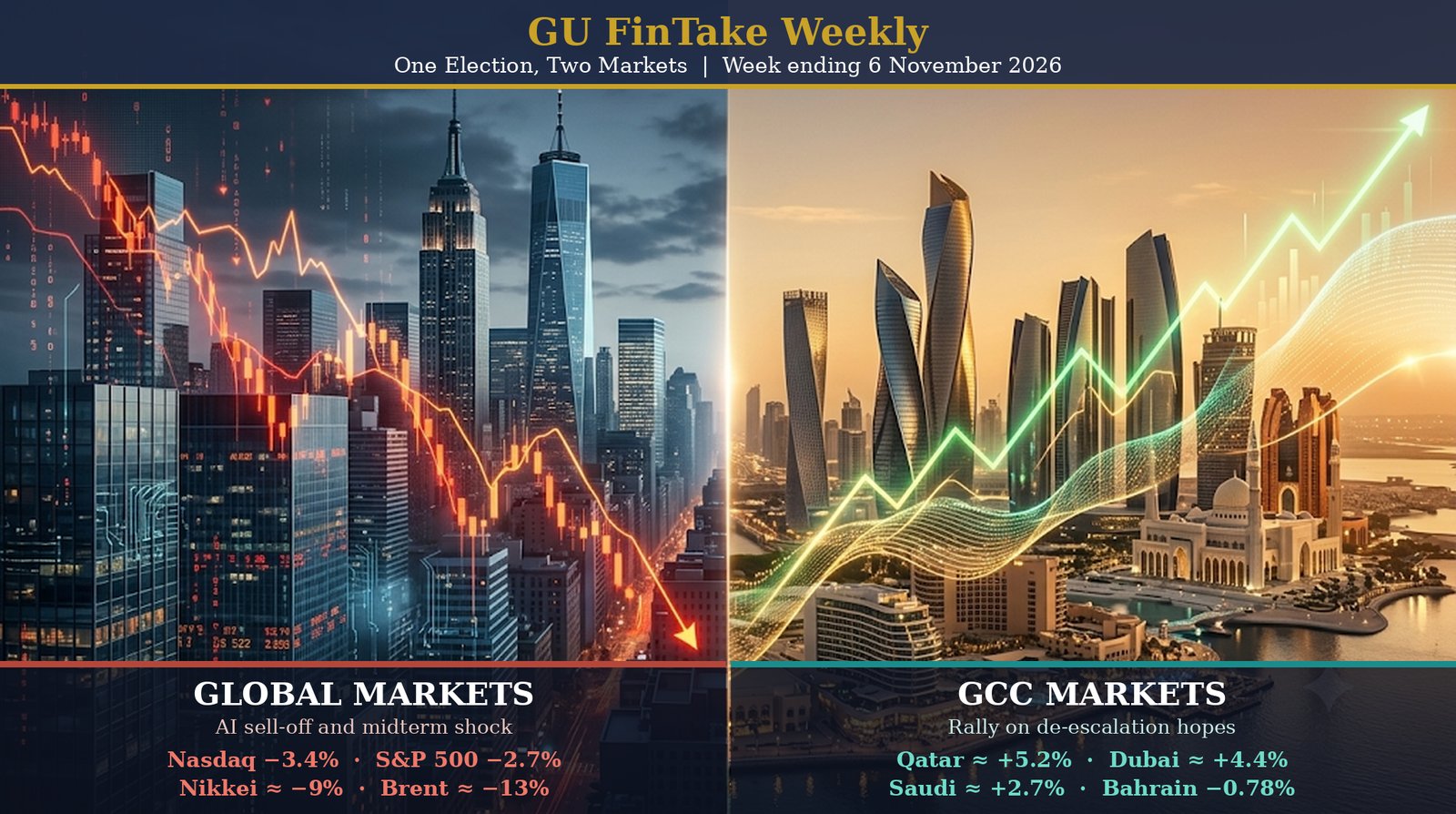
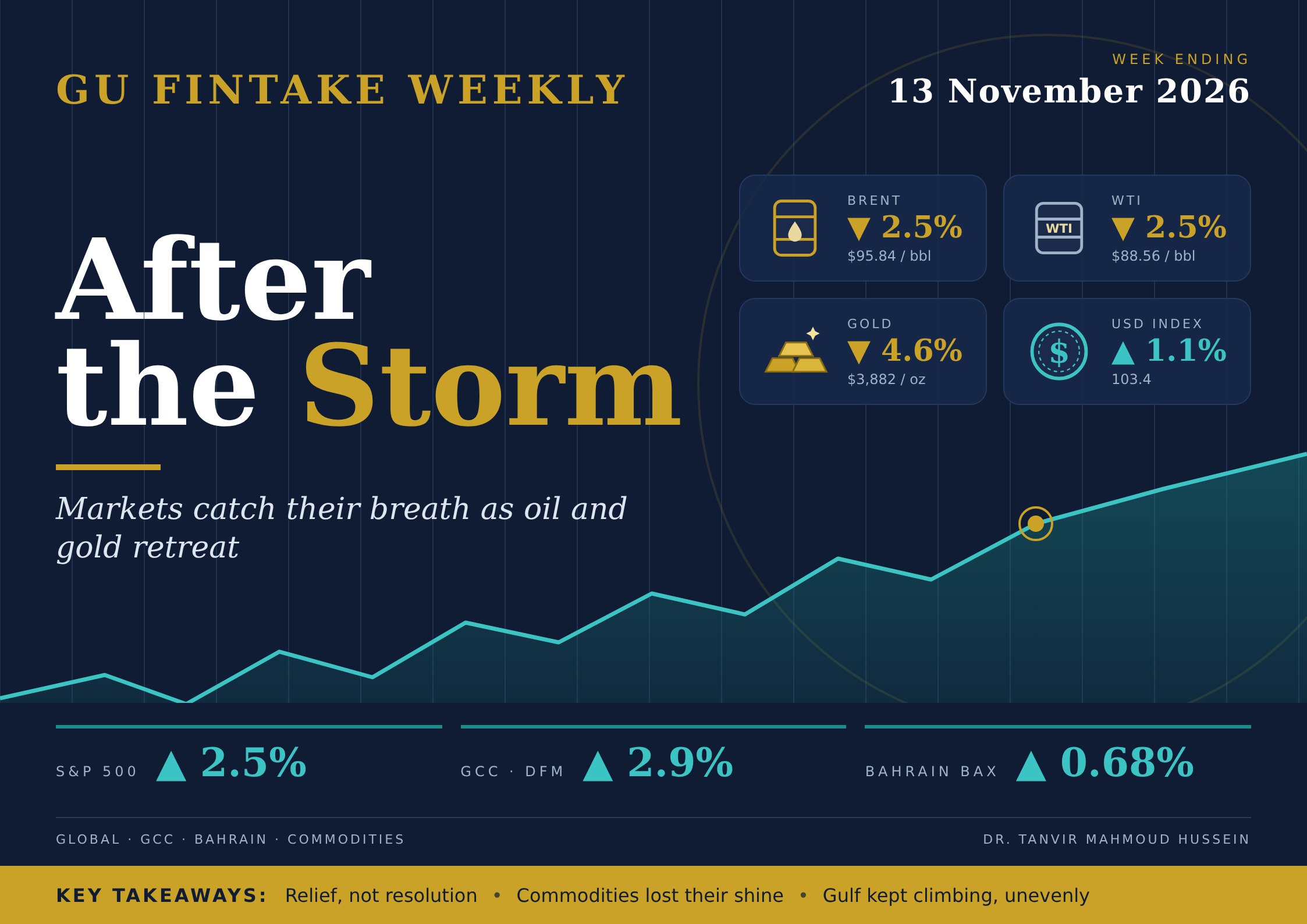
A week ago, markets were reeling. Technology shares had suffered their worst day in more than six years, oil had posted its steepest weekly fall since 2020, and Tokyo had lost about 9% in five sessions. The week 9–13 November 2026 told a calmer story: equities recovered, Gulf bourses extended their gains, and the two assets that had dominated the headlines—oil and gold—both moved lower.
U.S. stocks rebounded as investors returned to the artificial-intelligence and chip shares that had been sold heavily the week before. The S&P 500 rose 2.5% to 7,561.67, the Dow gained 2.1% to 52,347.55 and the Nasdaq Composite added 2.3% to 25,136.27—the first winning week for the major indices since early October.
The recovery was not without wobbles. On Friday, technology shares slipped again after Nvidia announced on Thursday that its chief executive, Jensen Huang, had resigned, and the Nasdaq fell 0.9% on the day. The macroeconomic backdrop also became less friendly. October consumer prices rose 0.4% month-on-month, slightly above expectations, and Federal Reserve officials, including New York Fed President John Williams, signalled that further rate increases were likely. Markets now see a December rate hike as highly probable, and the U.S. dollar strengthened by about 1% over the week.
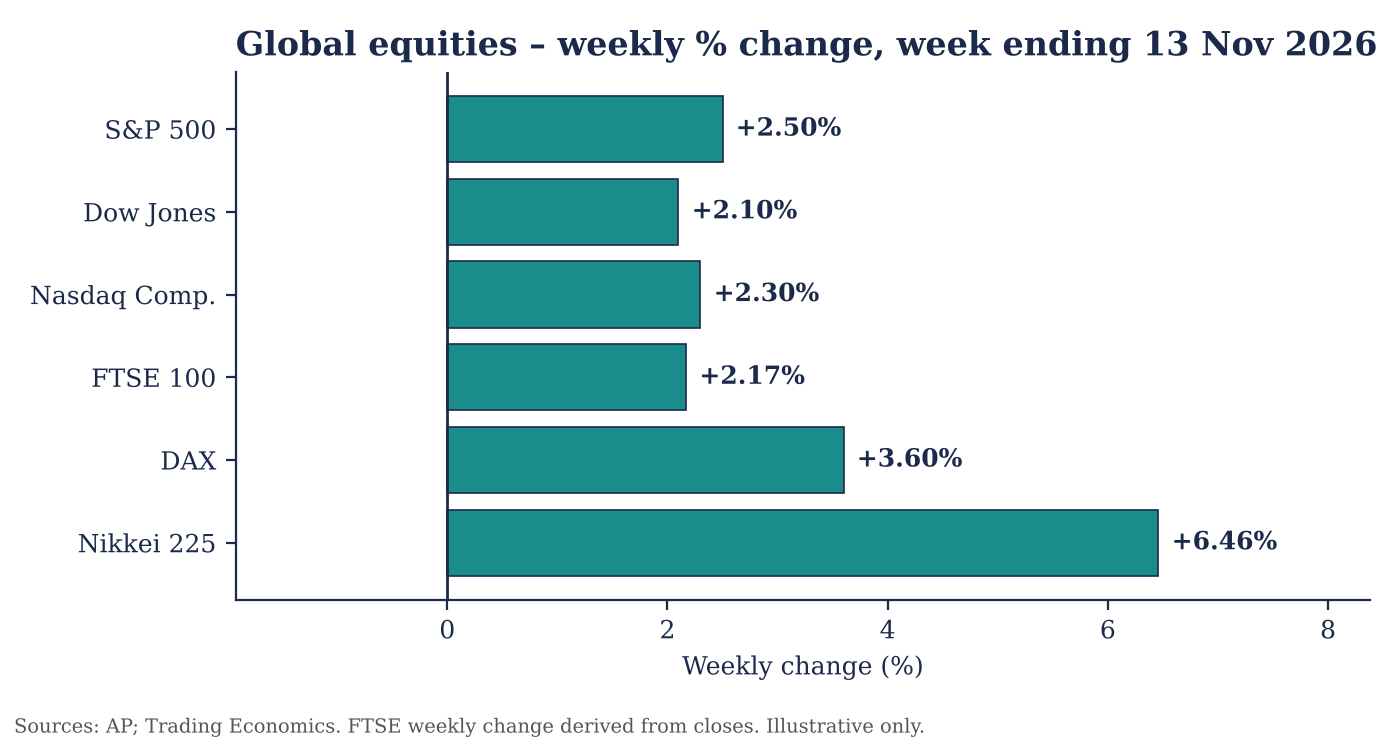
The rebound was global. Japan’s Nikkei 225 jumped about 6.5%, recovering much of the previous week’s loss, while Germany’s DAX rose about 3.6%, its best week since June, and London’s FTSE 100 gained around 2%.
Gulf markets continued to trade on the geopolitical news. Early in the week, President Trump signalled that new strikes on Iran were unlikely while talks continued, and he held off on further action after appeals from Qatar’s prime minister. That was enough to lift most regional bourses, even though the U.S. naval blockade of Iranian oil shipments remained in place and attacks on tankers and Saudi energy facilities continued.
Dubai and Abu Dhabi each rose about 2.9% for the week, with Emirates NBD a standout performer and the Dubai index reaching a near five-month high on Thursday. Both markets gave back some ground on Friday, however, after disappointing third-quarter results from companies including Salik and Air Arabia. Saudi Arabia’s TASI gained about 2.3% to around 10,326, led by Al Rajhi Bank, while Oman’s MSX30 added nearly 1%. Qatar, which had led the region the previous week, paused for breath and eased about 0.4%.
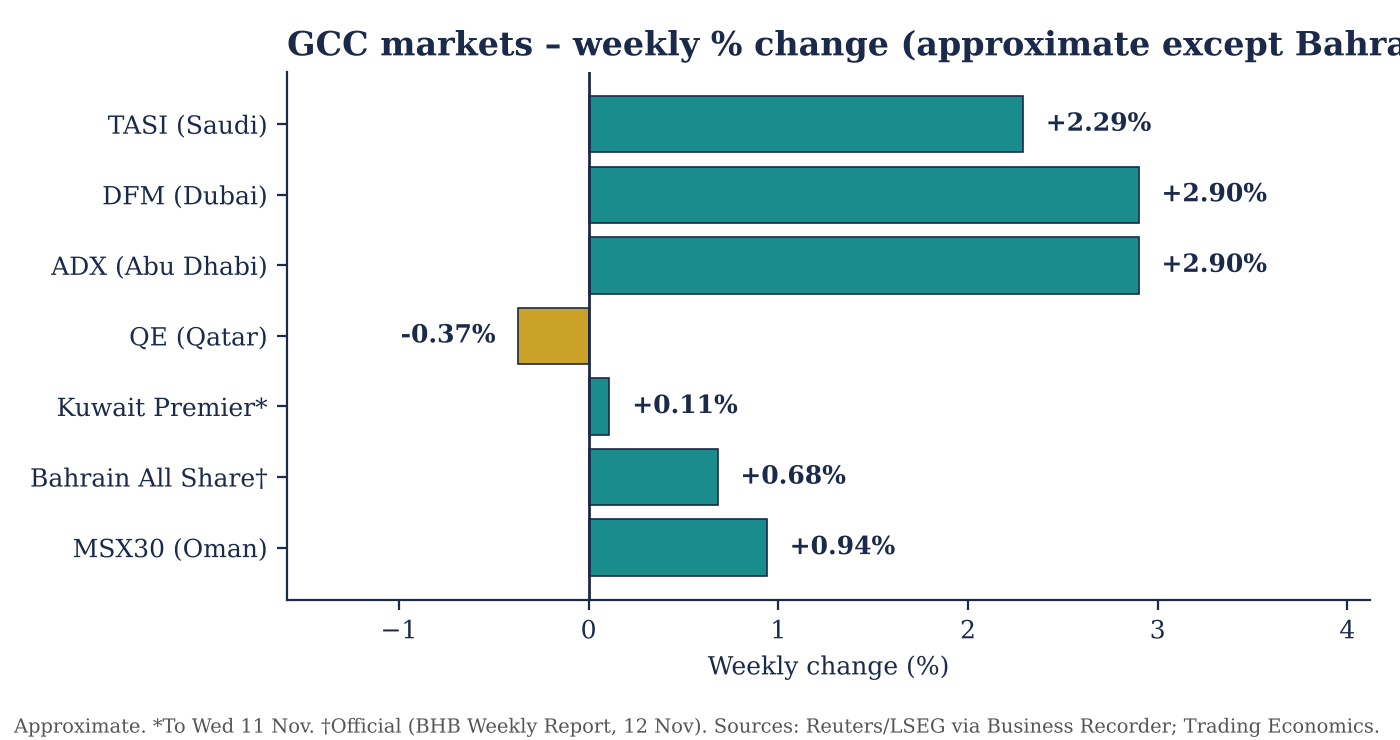
In Bahrain, the All Share Index rose 0.68% to 1,828.09, edging away from last week’s 52-week low. The Bahrain Islamic Index did better, gaining about 3.2%, helped by GFH Financial Group (+5.35%) and Bahrain Islamic Bank (+2.99%), while Industrials and Materials led the sector gains. Trading was quieter than the week before, however, with traded value down about 12% to BD 2.71 million—a sign that buyers remain selective.
Brent crude fell for a second consecutive week, settling at $95.84 per barrel, down about 2.5%. The International Energy Agency said the oil market is likely to move into surplus this quarter for the first time since the war began, as high prices have cut demand.
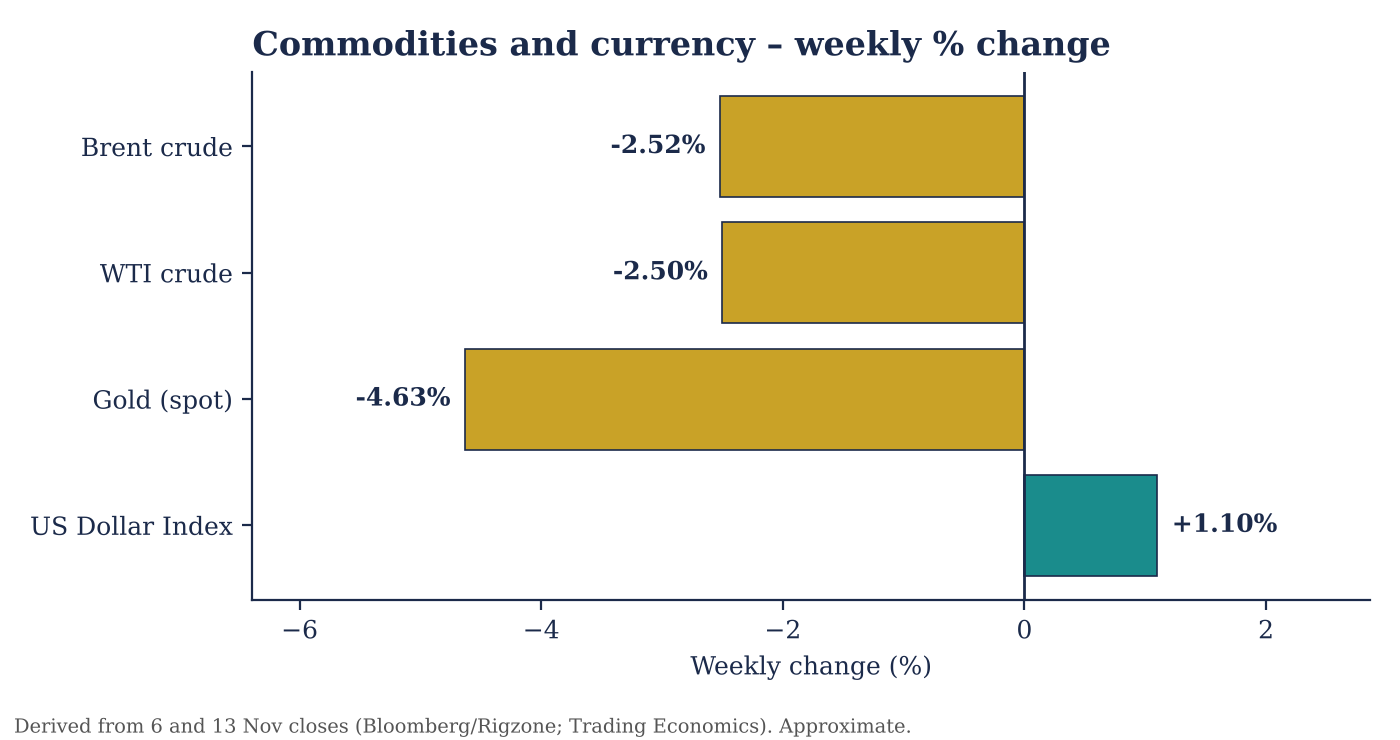
Gold fell more sharply, losing about 4.6% to around $3,882 an ounce—its steepest weekly decline since June—as a stronger dollar and the prospect of higher U.S. interest rates reduced the appeal of a metal that pays no interest.
Three questions stand out.
For the Gulf, softer oil prices reduce revenues, but a lower geopolitical risk premium has so far mattered more to investors.
Disclaimer: This blog is for educational and informational purposes only and does not constitute investment advice. Figures for GCC markets other than Bahrain are approximate; Bahrain figures are from the official Bahrain Bourse weekly report. Past performance is not indicative of future results.
Dr. Tanvir Mahmoud Hussein
Associate Professor of Finance and Head, Accreditation and Ranking Unit — Gulf University, Bahrain
He holds a PhD in Finance, is the author of a book on project management and holds four granted patents. Through GU FinTake Weekly, he explains global, GCC and Bahrain market developments in clear, accessible language for students, faculty and the business community.
Last Updated: 15 Nov 2026