April 27, 2026
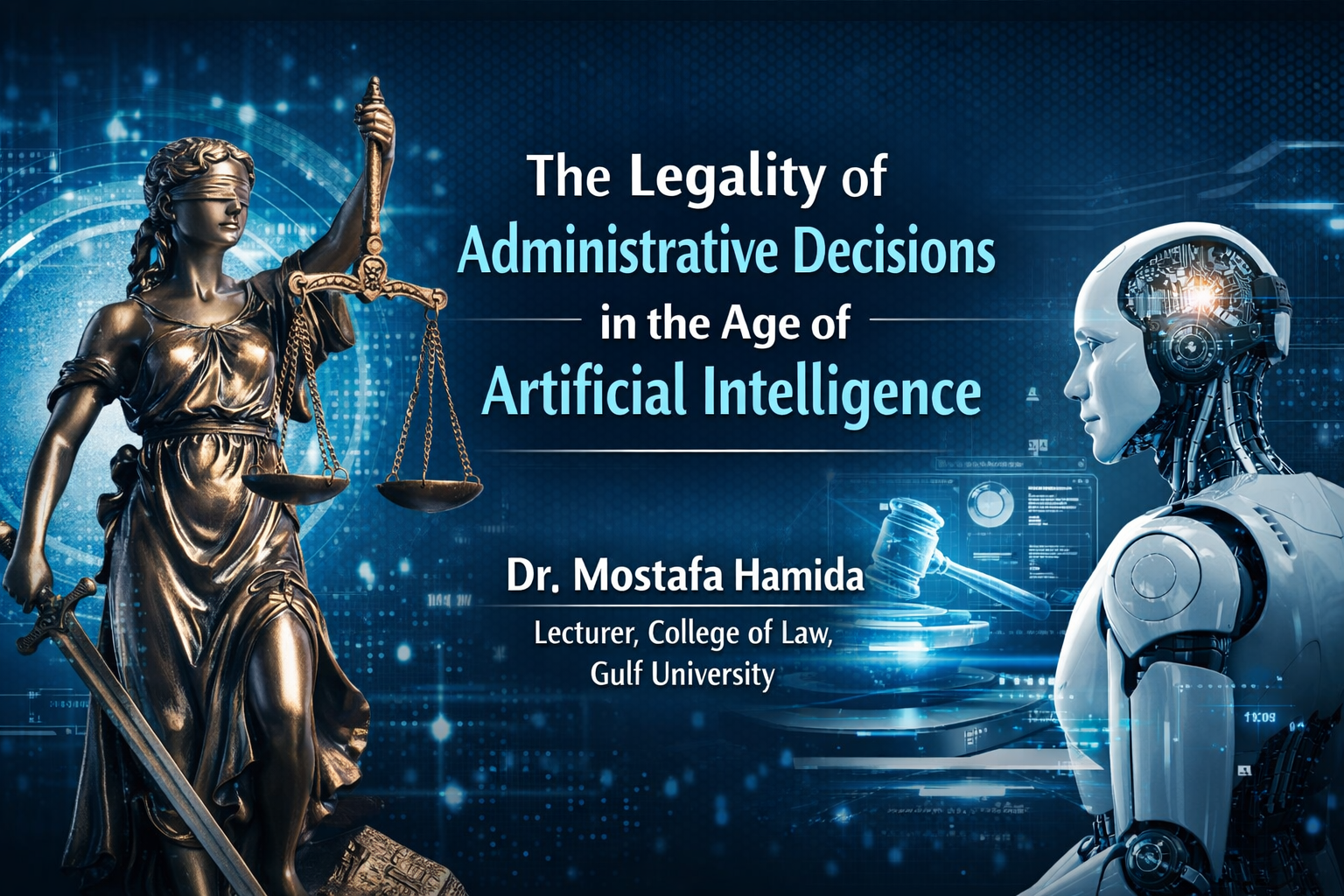
The Legality of Administrative Decisions in the Age of Artificial Intelligence
Dr. Mostafa Hamida


Artificial intelligence is rapidly becoming a key enabler of the United Nations Sustainable Development Goals. Explore how AI is reshaping poverty reduction, healthcare, education, agriculture, and climate action — and the ethical questions that come with it.
In recent decades, the world has witnessed profound transformations driven by rapid technological advancement. At the forefront of these changes is artificial intelligence (AI), which has emerged as a powerful tool capable of reshaping economic and social development pathways. With the adoption of the 2030 Agenda for Sustainable Development by the United Nations, the need to leverage modern technologies — particularly AI — has become increasingly essential to achieving the seventeen Sustainable Development Goals (SDGs) more efficiently and innovatively.
Artificial intelligence is considered a key enabler of sustainable development due to its ability to process vast amounts of data, predict future trends, and support evidence-based decision-making. In the context of poverty reduction (SDG 1), AI technologies can be used to accurately identify vulnerable populations and optimize the allocation of resources, ensuring fairness and efficiency.
A notable real-world example is the use of AI by the World Bank, which employs machine learning models to analyze satellite data and identify poverty levels in developing regions, enabling more targeted policy interventions.
In the field of education (SDG 4), AI contributes significantly to improving learning outcomes through personalized and adaptive learning systems. For instance, Duolingo uses AI-driven algorithms to tailor language lessons to individual learners, enhancing accessibility and learning efficiency worldwide.
Within the Gulf region, countries like the United Arab Emirates have integrated AI into their educational systems through smart learning platforms and national AI strategies aimed at modernizing education and promoting lifelong learning.
In the healthcare sector (SDG 3), AI plays a transformative role by enabling early disease detection, improving diagnostics, and accelerating drug development. A prominent example is IBM Watson Health, which has been used to assist in cancer diagnosis and treatment planning through advanced data analysis.
Additionally, during global health crises such as the COVID-19 pandemic, AI systems were widely used in countries like the United States and United Kingdom to track infection patterns and predict outbreak trends, supporting timely public health responses.
AI also contributes to food security (SDG 2) through smart agriculture. In Europe, companies such as John Deere have developed AI-powered precision farming technologies that optimize crop yields while minimizing resource consumption.
In the Arab region, initiatives in Saudi Arabia under Vision 2030 utilize AI in agriculture and water management to enhance sustainability and address environmental challenges.
From an environmental perspective (SDG 13), AI provides advanced tools for monitoring climate change and managing natural resources. For example, Google has developed AI models to predict floods and track carbon emissions, helping governments and organizations take proactive environmental measures.
Furthermore, AI supports the development of smart cities by optimizing energy consumption, traffic management, and waste reduction. Cities like Dubai have adopted AI-driven smart city initiatives to improve urban sustainability and quality of life.
Satellite-data ML models identify vulnerable populations to direct interventions where they matter most.
Personalized AI tutoring systems make quality education more accessible across the globe.
AI accelerates diagnostics, drug discovery, and pandemic-response intelligence.
Models predict floods, track emissions, and guide smart city planning for sustainability.
Despite its vast potential, the integration of AI in sustainable development faces several challenges. These include the digital divide between countries, lack of regulatory frameworks, and concerns related to data privacy and security. Moreover, excessive reliance on technology may risk marginalizing certain groups, highlighting the need for inclusive digital policies.
In this context, it is crucial to develop national and international strategies that promote the responsible use of AI while aligning it with sustainable development priorities. This requires collaboration between governments, the private sector, and academic institutions, as well as investment in digital infrastructure and human capacity building.
The future of development is no longer solely dependent on traditional resources but increasingly on the ability of societies to harness knowledge and technology to build a more equitable and sustainable world.
In conclusion, artificial intelligence represents a historic opportunity to accelerate progress toward sustainable development. However, its success depends on its ethical and responsible application, ensuring that technological innovation is balanced with human values. The future of development is no longer solely dependent on traditional resources but increasingly on the ability of societies to harness knowledge and technology to build a more equitable and sustainable world.
Dr. Adel Albelal
Assistant Professor of Public Law — Gulf University
Last Updated: 08 Jun 2026