
May 25, 2026
Micro-Credentialing in Higher Education: Building Tomorrow’s Workforce, One Skill at a Time
Dr. Sherif Badran

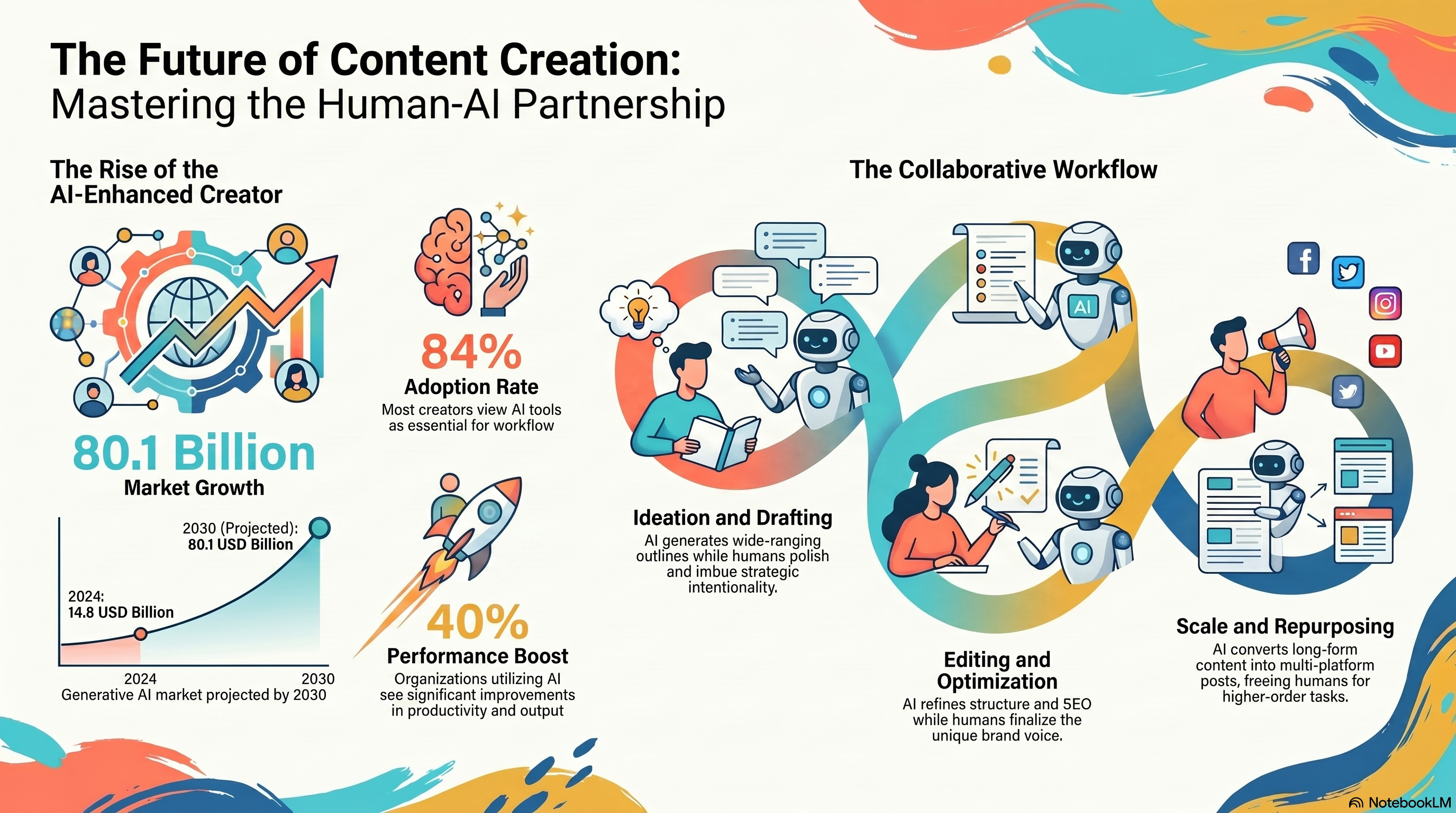
Content creation was once regarded as the exclusive domain of human imagination. AI has changed that — but the real story is not replacement, it is partnership. A look at how humans and AI are learning to create together.
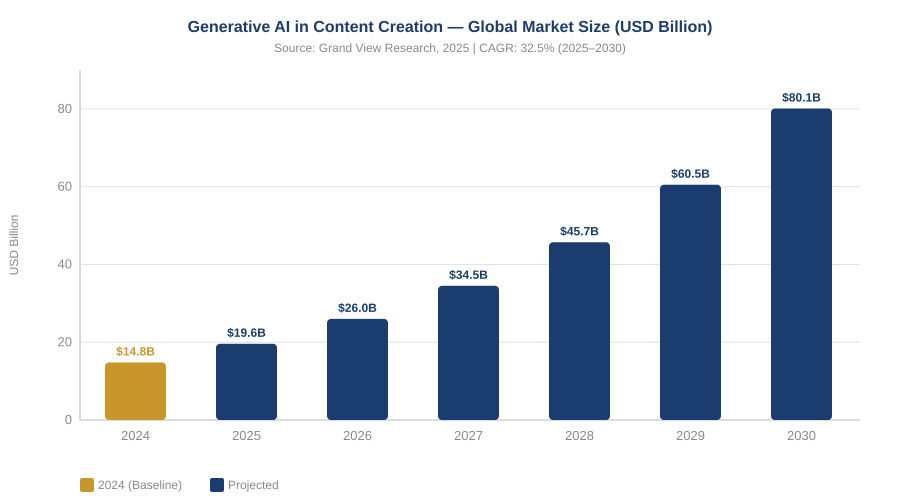
In no distant past, content generation was regarded as the exclusive responsibility of humans requiring imagination, experience, and culture. AI, on the other hand, has made significant headway in this arena. But the most important thing is not the replacement of man by machines, but rather the creation of a partnership between the two. The partnership is taking place rapidly. The global market for generative AI content creation is estimated to be worth USD 14.8 billion in 2024 and will reach USD 80.1 billion by 2030 with a CAGR of 32.5%.
At Gulf University, we believe that understanding this transformation is essential for students, educators, and professionals across every discipline. Whether you are studying business, communication, engineering, or media design, the ability to collaborate effectively with AI is fast becoming one of the most valued capabilities of our era.
Today’s AI technologies, which include language models, generative image tools, and AI-based video tools, can create texts, images, programming code, and even summarizations of information with unprecedented efficiency and on a huge scale. With such technologies, you can write an article, translate information into dozens of languages, find ways to improve SEO optimization, and turn long texts into social media posts.
The numbers behind the adoption rate are simply stunning. Thus, according to the survey held in 2024, 84% of content creators stated their use of AI-based tools as an essential part of their workflow, noting the productivity gains and cost savings achieved with them.
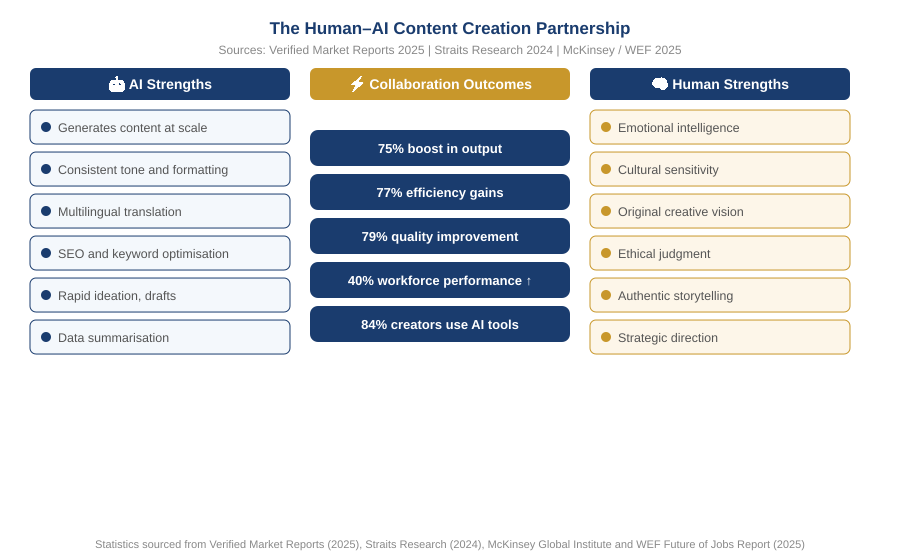
However, there are definite limits to AI capabilities. The technology recognizes patterns in the available information and uses them but does not feel or experience anything. It lacks the understanding of the social context of the community, cannot read the subtext of emotions in the room, and definitely cannot establish the trust based on authentic human storytelling.
Instead of viewing AI as something that could replace you, think about it as an especially talented partner in creation. The best content experts nowadays are neither the ones that try to resist AI nor the ones who allow it to dictate everything to them but the ones who know how to control it. Here is what such cooperation looks like.
The findings are measurable. It has been found that 75% of marketers believe that the use of AI boosts their content production, 77% witness increased efficiency, and 79% feel that it improves the quality of content. According to McKinsey, firms using AI can improve their workforce performance by 40%.
In its report, Future of Jobs Report 2025, the World Economic Forum forecasts that by 2030, approximately 39% of core skills in the workforce will be modified or made obsolete, and 80% of employers plan on retraining their employees through AI training. Meanwhile, UNESCO has designated AI literacy as one of the fundamental literacies of the 21st century and initiated worldwide projects on AI Literacy and the Digital Divide in 2024.
As a result of such changes, for universities like Gulf University, the goals of preparing students become different. They require much more from students than just doing the job. These new competences include:
These are not technical skills; they are the fundamental human skills at the center of university education. It is the individuals who will dominate in such a sphere that will have unique judgment, vision, and empathy to work with AI systems effectively, not people who will be able to master all available AI technologies.
For those new to using AI in content creation, here are some practical steps:
The development process for content generation does not fall either entirely under the purview of humans or of machines alone. It is the responsibility of the individual able to harness the potential of the combination of both humans and artificial intelligence. As artificial intelligence advances, the advantage in competition will be for the creators that combine curiosity, empathy, ethics, and creativity to inform their collaboration with machines.
Here at Gulf University, we believe in training our people to acquire the necessary skills and knowledge needed to thrive in this changing environment. This is an important topic in today’s time. We encourage everyone to join this discussion.
Dr. Sherif Badran
Gulf University, Bahrain
Last Updated: 29 Jun 2026
