
Lights, Camera, Sustainability: The Rise of Green Television Production

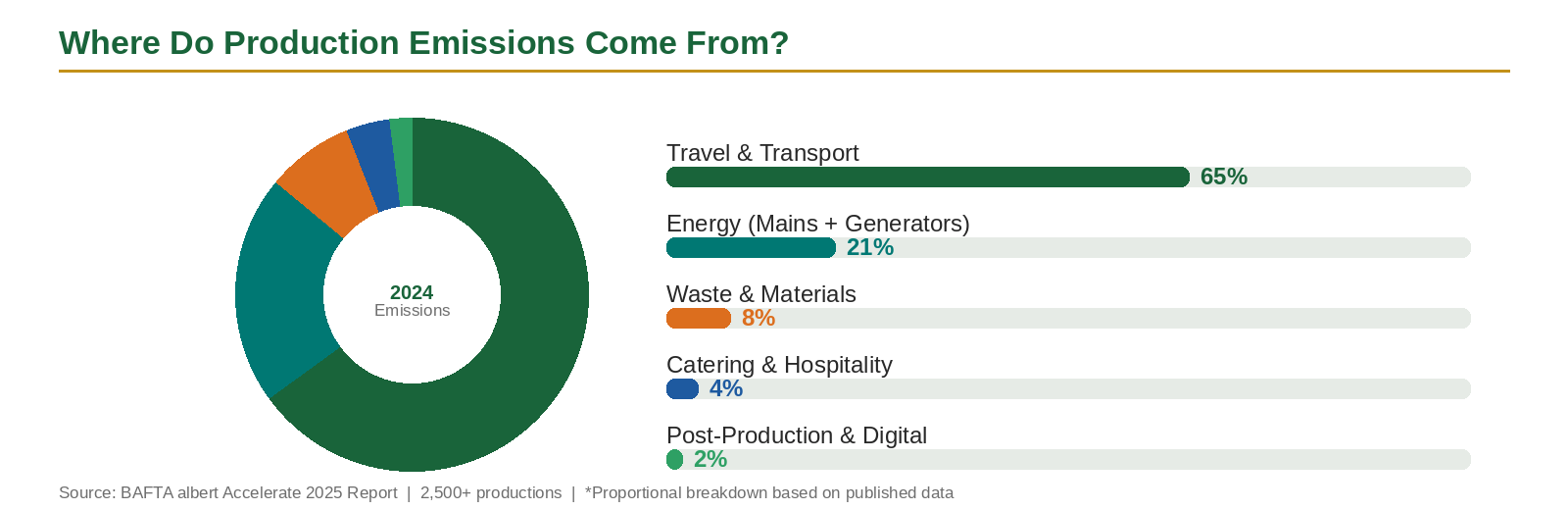
TV production is innovative, cultural, and carbon-intensive. According to BAFTA Albert’s Accelerate 2025 report, the industry generated 174,437 tonnes of CO₂e in 2024 — equivalent to the annual carbon footprint of 40,000 citizens. The Paris Agreement’s 1.5°C goal calls for all sectors to halve emissions by 2030.
Sustainability cannot be the responsibility of one or two people: everyone has a role to play. We must accelerate our efforts to meet the scale of the climate challenge.

Understanding the Emissions Landscape
The Five Pillars of Green Production
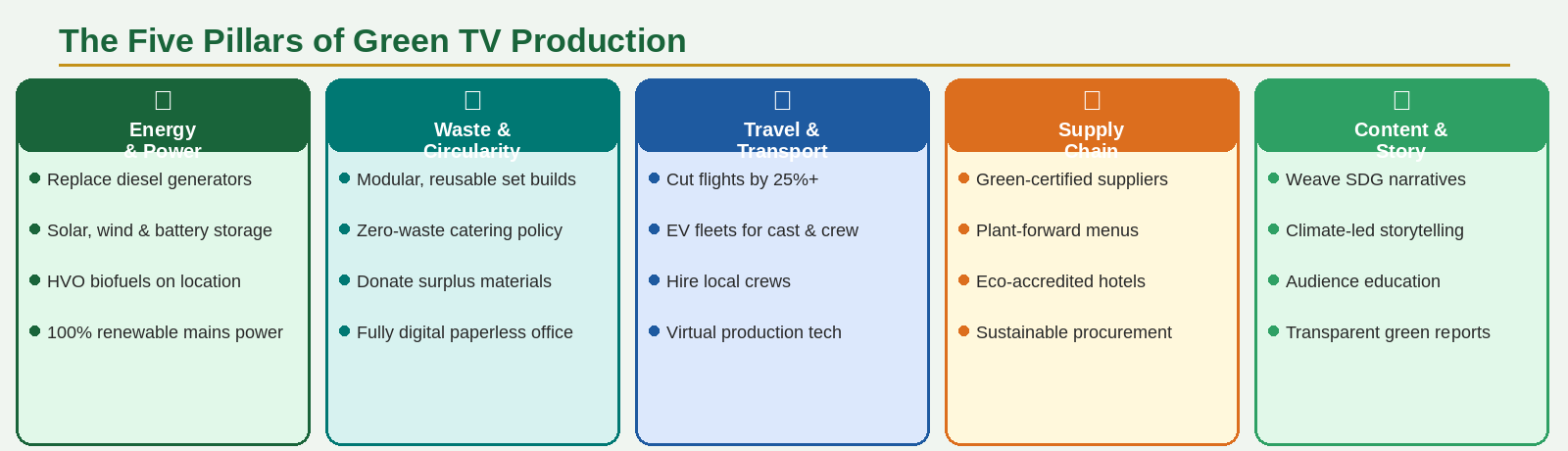
- Electricity & Power: Replace diesel generators with HVO biofuel, battery storage, or solar.
- Waste & Circularity: Design sets for reuse, zero-waste catering, fully digital offices.
- Travel & Transport: Cut flights, mandate economy class, hire locally, deploy EV fleets.
- Supply Chain: Green-certified accommodation, sustainably sourced props and equipment.
- Content & Storytelling: Stories told on screen reach billions and can inspire systemic behaviour change.
The Green Production Lifecycle
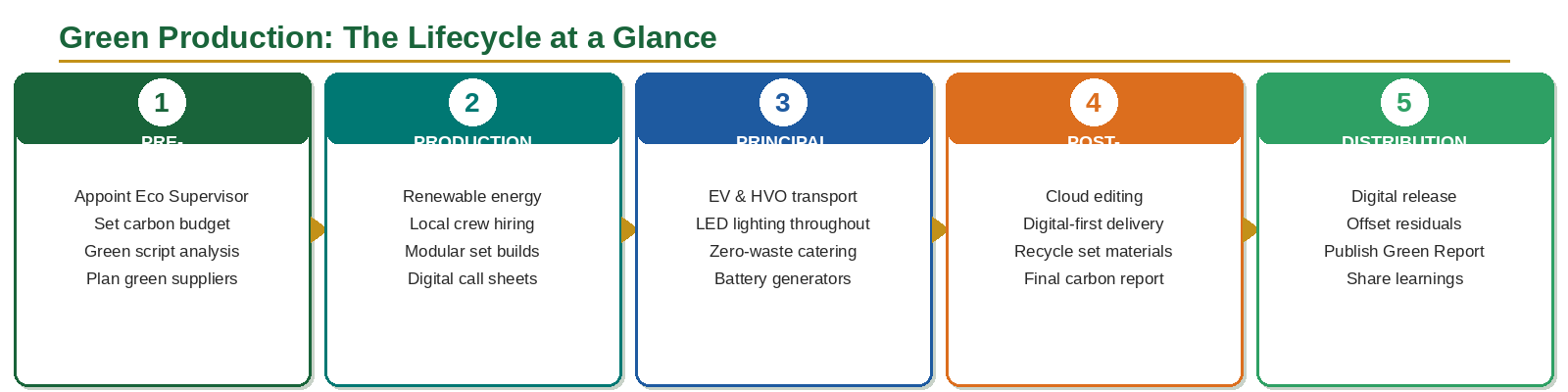
Phase 1–2 (Pre-Production): Appoint an Eco Supervisor, set a carbon budget alongside the financial budget, and conduct green script analysis. Phase 3 (Principal Filming): Deploy EV fleets, battery/HVO generators, LED lighting — reducing energy consumption by up to 75%. Phase 4 (Post-Production): Cloud-based editing and digital delivery. Phase 5 (Distribution): Digital-first release eliminates physical media waste.
Green TV and the UN Sustainable Development Goals
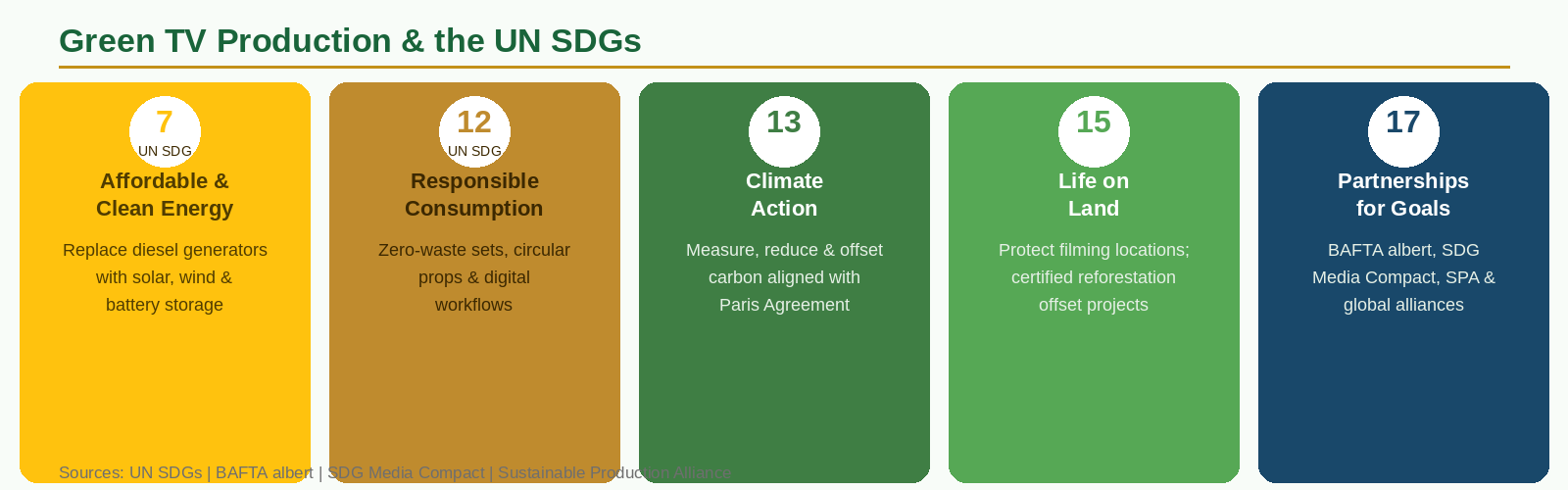
Over 80% of Netflix members watch content that helps them better understand climate issues. When that reach is combined with purpose-driven storytelling, television becomes one of the most powerful levers for accelerating public understanding and acceptance of sustainable behaviour change.
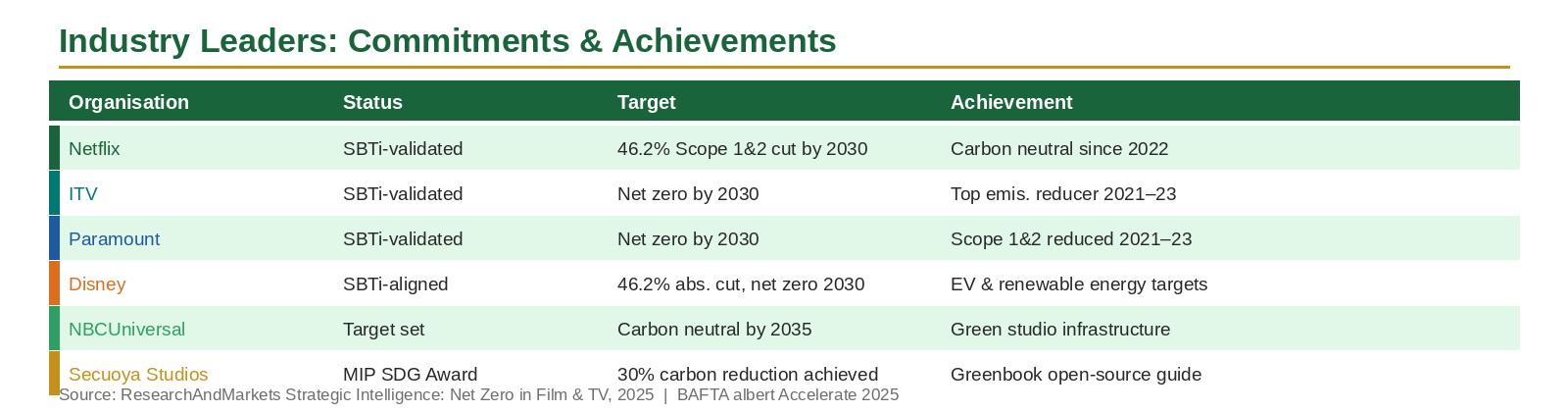
Who Is Leading the Transition?
Conclusion
Green television production has moved decisively from aspiration to measurable action. Emissions are falling. Virtual production technology, cloud workflows, and renewable energy systems are removing barriers to sustainable practice. The pathway forward demands a three-part commitment: measure all emissions through certified tools; reduce systematically through the five pillars; and report transparently — sharing learnings freely so every production that follows can build on what came before.

Last Updated: 3 June 2026