April 1, 2026
Crisis Leadership: Turning Challenges into Opportunities
Dr. Shafeeq A.A & Dr. Ali Ahmed Ateeq


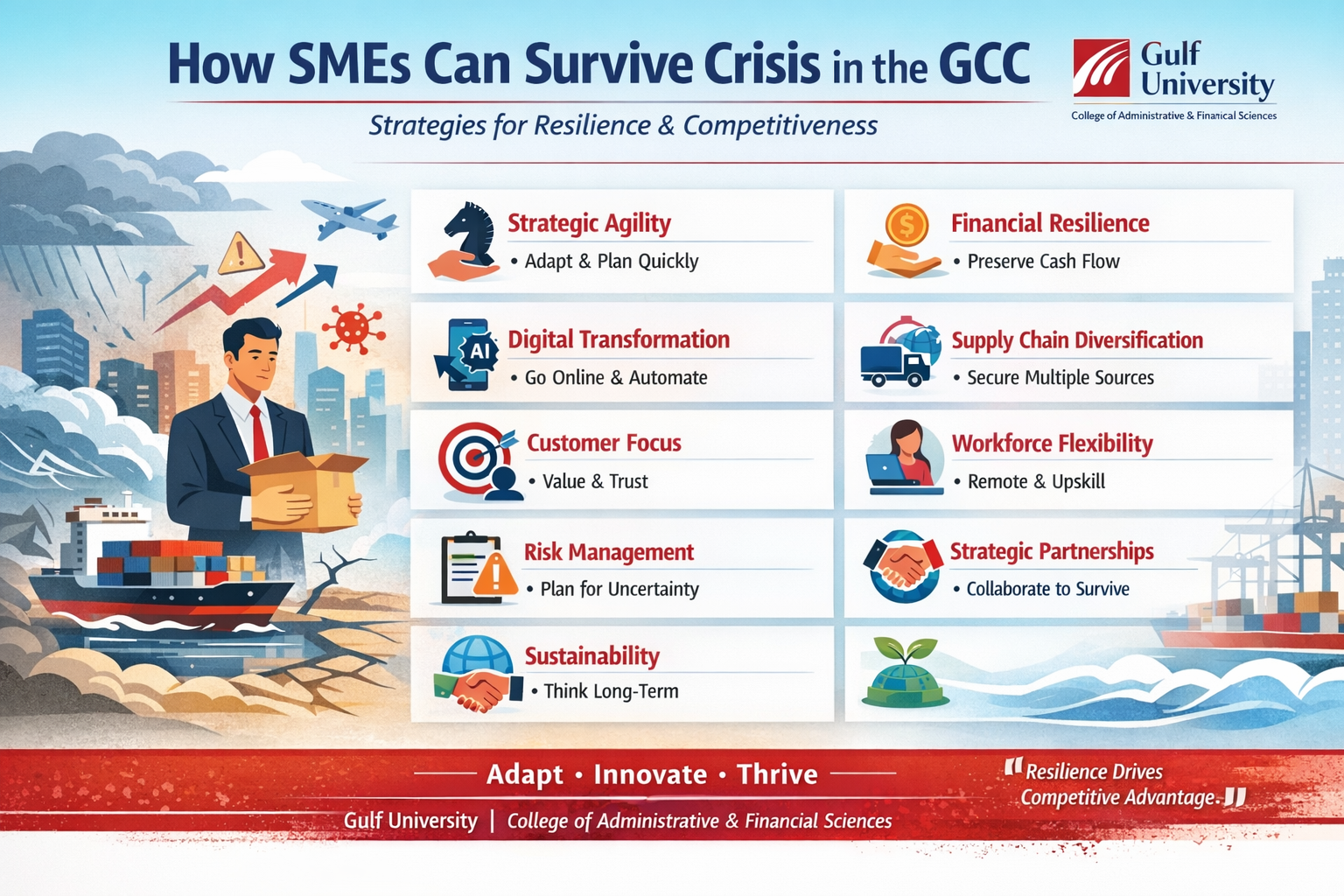
Explore the role of strategic agility in helping universities effectively manage crises and adapt to rapid change. This blog examines how institutions can enhance resilience through proactive planning, flexible structures, and innovative approaches to education delivery.
It has become clearer than ever that strategic agility in universities helps develop an integrated strategy for dealing with crises and changes, and for capitalizing on the opportunities arising from them. Strategic agility enables universities to effectively manage crises through rapid adaptation, reorganization, and strategic shifts to ensure survival and continuity. It also facilitates a proactive response to unforeseen crisis events by enabling swift decision-making, flexible operational structures, and enhanced resilience to maintain the quality and competitiveness of education.
Under these circumstances, Gulf University, as one of the leading private universities in the Kingdom of Bahrain, has distinguished itself with proactive vision in the current situation by reinforcing the university’s strategic role in effectively managing the crisis. This is embodied in its Board of Trustees and its innovative President, and through the implementation of:
Establishing and consolidating a culture of strategic agility in Bahraini society in general, and universities in particular, has become an essential and urgent educational necessity for managing unforeseen events. This will enable universities and society to adjust their strategic courses and improve their educational outcomes in the academic sphere. Thus, strategic agility has become an essential capability for universities navigating an increasingly complex and unpredictable environment. As demonstrated through insights connected to Gulf University, the ability to anticipate change, adapt quickly, and innovate effectively enables institutions to maintain continuity and enhance their competitive position.
By embracing flexible structures, leveraging technology, and prioritizing both academic quality and student well-being, universities can transform crises into opportunities for growth. Ultimately, fostering a culture of strategic agility is not only a response to current challenges but a long-term investment in resilience, sustainability, and educational excellence.
Dr. Shafeeq A.A
Assistant Professor of International Economic Relations and Foreign Policy
Dr. Ali Ahmed Ateeq
Assistant Professor, PhD (HRM) | MBA | BSc (BSBI)
Last Updated: 21 Apr 2026