April 21, 2026
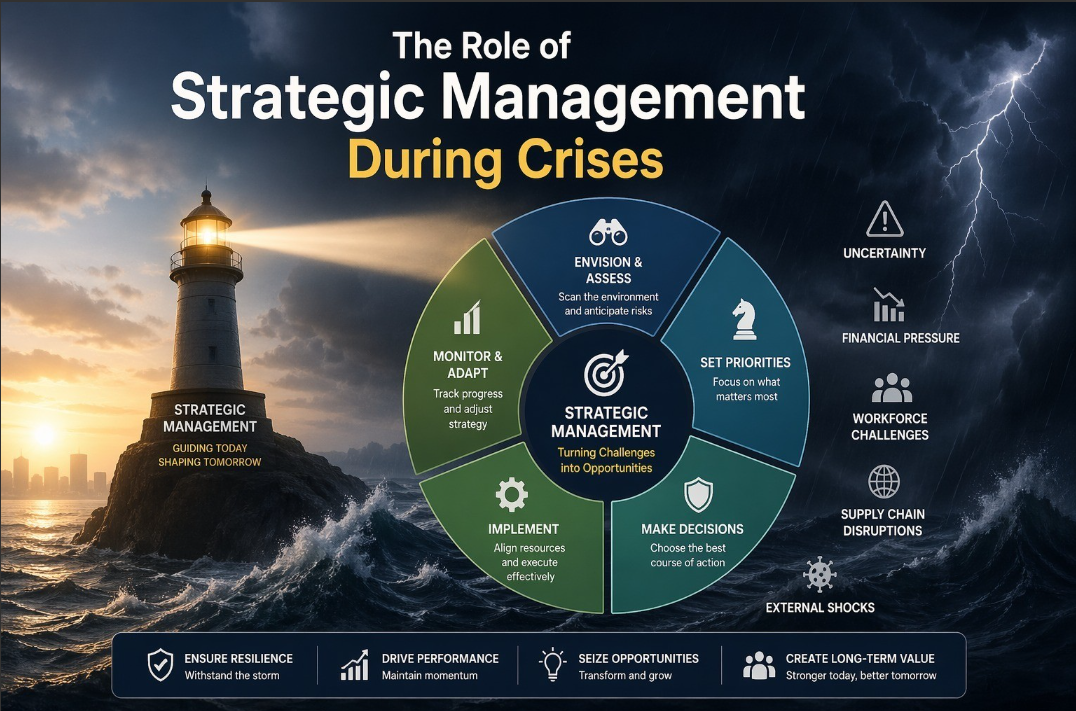
The Role of Strategic Management During Crises
Dr. Baligh Beshr

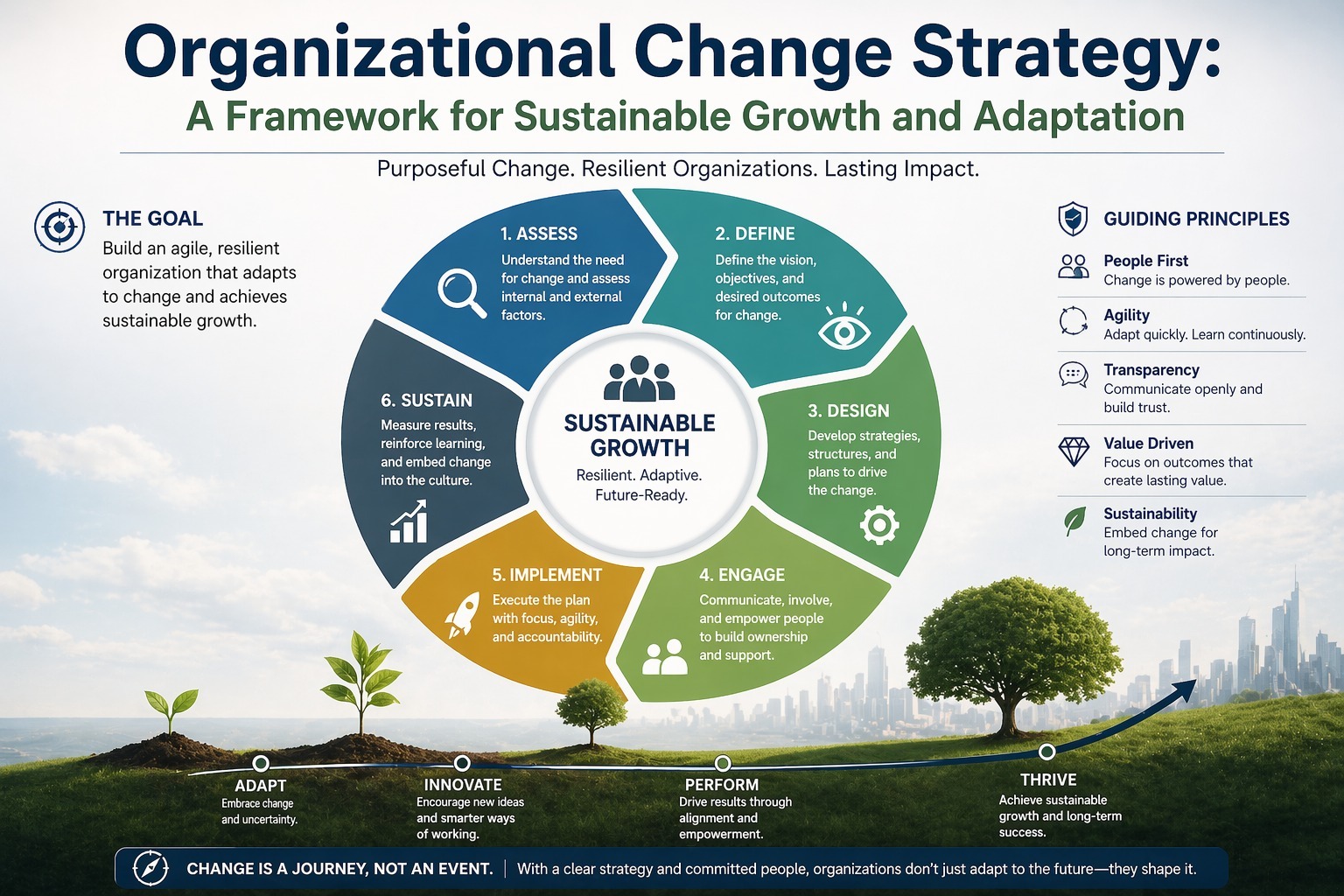
Explore how an effective organizational change strategy helps institutions adapt to technological, economic, and social shifts through planning, leadership, employee engagement, and proven change models.
In light of the rapid evolution of economic, technological, and social environments, institutions and organizations are in dire need of continuous adaptation to surrounding changes to maintain their competitiveness and success. Therefore, organizational change plays a pivotal role in enabling organizations to overcome challenges and achieve their desired goals. An organizational change strategy means systematic and targeted planning to transform the structure, culture, or processes of an organization to align with new requirements.
An organizational change strategy begins with a comprehensive understanding of the organization's current situation and an assessment of its strengths and weaknesses, as well as an identification of opportunities and threats in the external environment. This analysis helps leaders clearly define the objectives of the change and prioritize the areas that need to be addressed. Following this, a detailed plan is developed, outlining the steps to be taken, the resources required, and the expected timeframe.
One of the most important elements for the success of an organizational change strategy is the involvement of all organizational levels in the change process, from senior management to employees on the ground. This participation helps mitigate potential resistance to change and fosters a sense of ownership and responsibility among individuals regarding the changes that occur. Furthermore, it is essential to provide the necessary training and support to equip employees to cope with the new changes. Organizational change strategies encompass several models and approaches, such as Kotter's model, which focuses on injecting change into the organization by creating a sense of urgency, building a strong coalition, establishing a clear vision, and engaging in intensive communication. Another model is Lewin's, which is divided into three main phases: breaking down resistance, implementing the change, and then solidifying the change into the organizational culture.
One of the challenges facing organizational change strategies is resistance to change stemming from fear of the unknown, feelings of insecurity, and ingrained habits. Therefore, leaders must work on building strong trust with their teams and communicate continuously and transparently to overcome these obstacles. Thus, organizational change strategies are a fundamental pillar for ensuring the continued development and sustainable success of organizations. It is not merely a technical or procedural change, but a comprehensive process that requires a clear vision, meticulous planning, active participation, and ongoing support from all stakeholders within the organization.
An effective organizational change strategy is essential for institutions seeking long-term sustainability in rapidly evolving environments. By combining clear vision, strategic planning, employee involvement, and continuous communication, organizations can successfully transform their structures, cultures, and processes. Addressing resistance through trust-building and support mechanisms further increases the likelihood of success. Ultimately, organizational change is not just about implementing new systems but about creating an adaptive and resilient organization capable of sustained growth and competitiveness.
Keywords: organizational change strategy, change management, employee engagement, Kotter model, sustainable growth
Dr. Baligh Beshr
Associate Professor of Management, College of Administrative and Financial Sciences
Last Updated: 23 Apr 2026