March 31, 2026
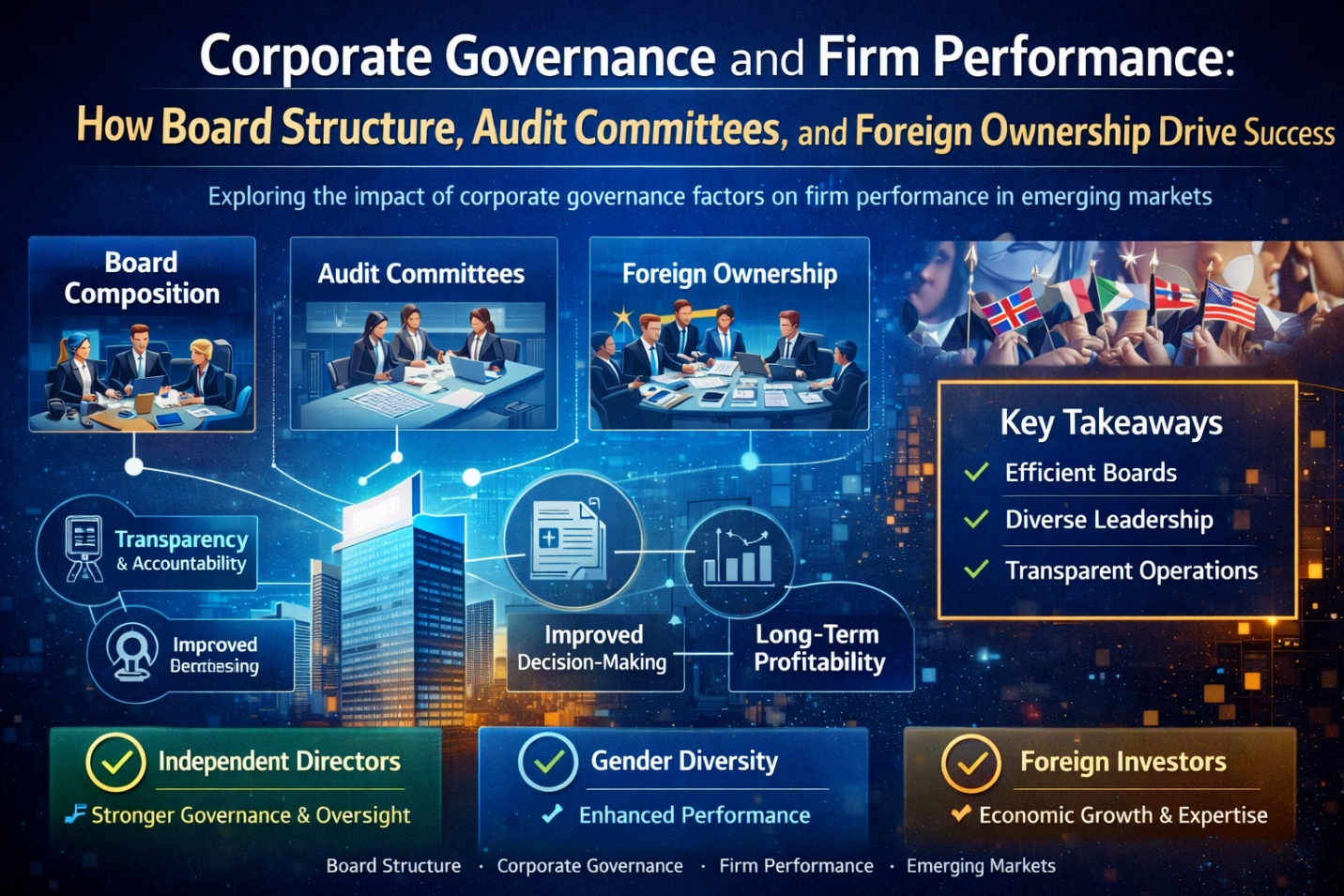
Corporate Governance and Firm Performance: How Board Structure, Audit Committees, and Foreign Ownership Drive Success
Dr. Mujeeb Saif

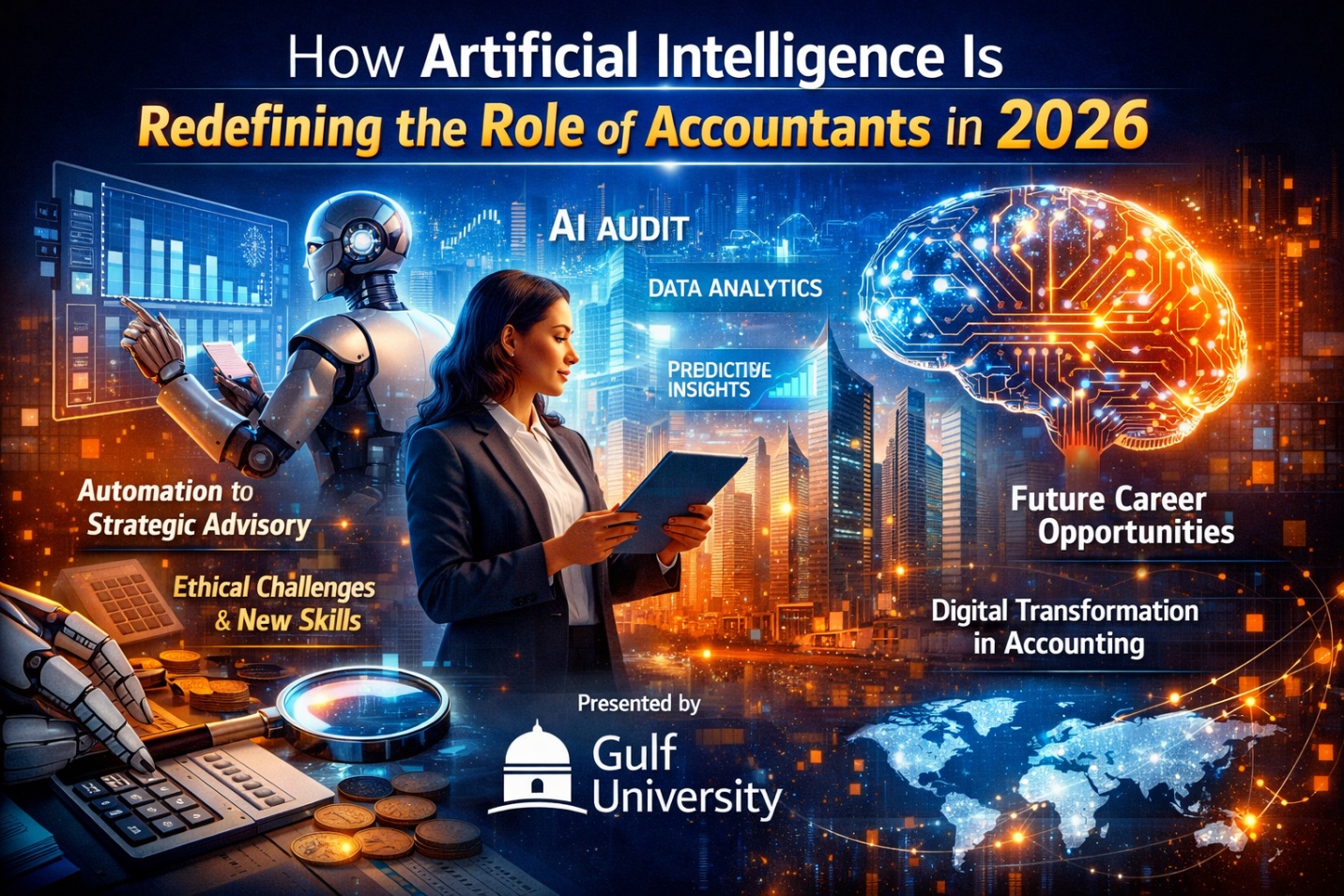
Discover how artificial intelligence is reshaping the accounting profession, from automation to strategic decision-making. Learn how Gulf University highlights evolving skills, ethical challenges, and new career opportunities for accountants in the digital age.
Accounting has experienced a transformation during the past few years, which defied all predictions made ten years ago. The profession, which used to focus on manual data entry and compliance and historical reporting, now develops into a strategic field that uses advanced technology. The process of this transformation exists because Artificial Intelligence (AI) serves as its main driving force.
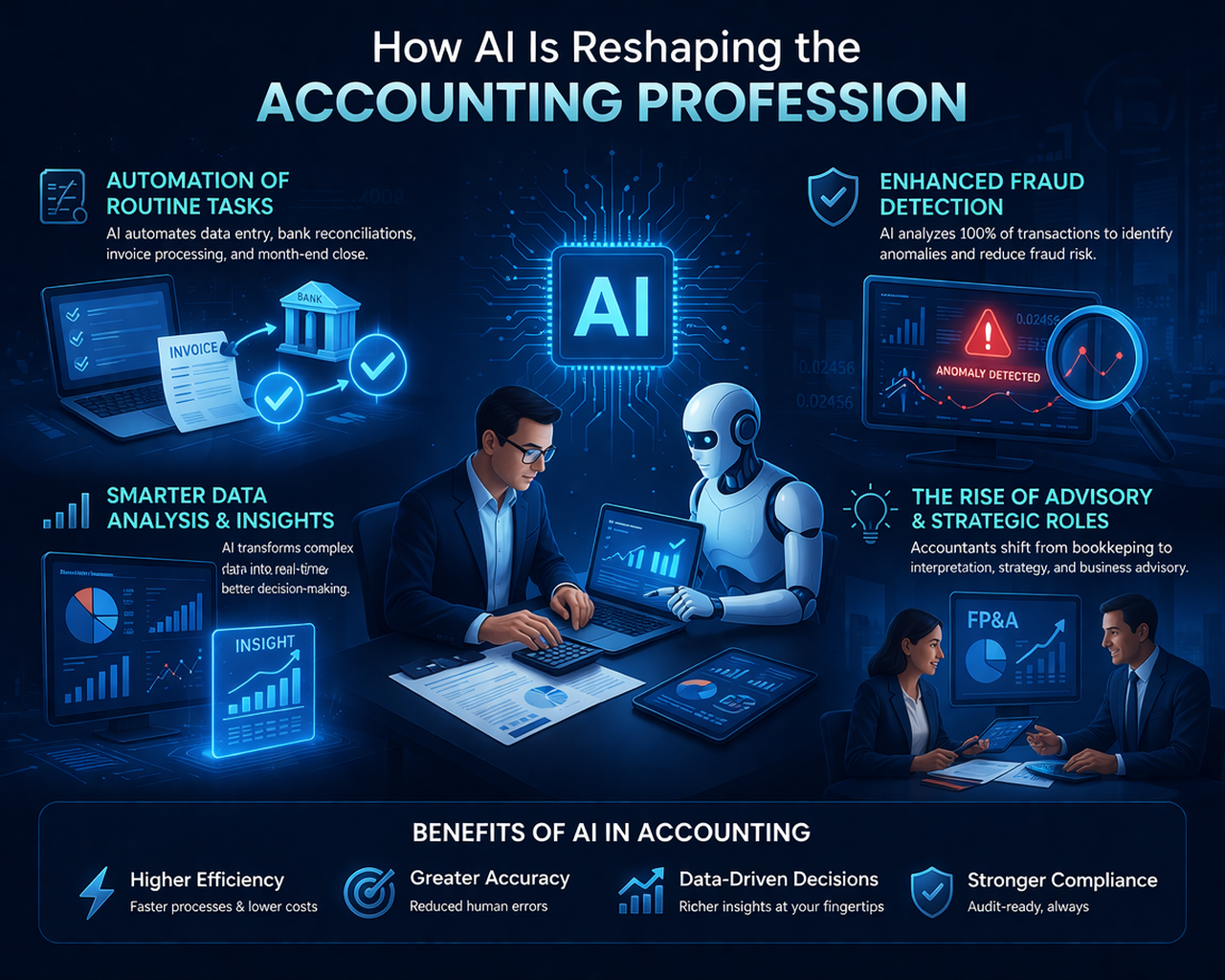
The historical perception of accountants as financial record custodians has changed because AI-powered tools now handle repetitive tasks which include data entry and invoice processing and basic auditing tasks. The role of accountants does not disappear through this change because it leads to a new professional responsibility. The modern accounting profession requires accountants to analyze data while creating business insights that assist in decision-making processes. Accountants now assist organizations in predicting future outcomes instead of analyzing past financial events.
AI technology has become a fundamental part of current accounting systems which businesses utilize today. The most significant uses of the technology include the following:
AI systems identify and sort financial transactions with high precision but need minimal human intervention.
Machine learning algorithms detect suspicious activities which have the potential to result in fraudulent activities.
Helps businesses obtain better results in cash flow and revenue forecasting and risk assessment.
Enable complete dataset analysis which improves auditing accuracy above traditional sampling methods.
The financial reporting process benefits from these innovations which create more efficient operations and improve both accuracy and transparency standards.
The progress of technological advancements to handle everyday tasks has resulted in new accounting skill requirements. Future professionals must develop competencies beyond traditional accounting knowledge, including:
Universities and professional bodies are beginning to adapt their curricula, but students must also take initiative to stay relevant in this fast-changing environment.
The increasing use of artificial intelligence presents fresh ethical challenges. The situation creates three main problems which include data privacy issues and algorithmic bias problems and the need to establish responsibility. The question of responsibility arises when an AI system produces incorrect results. Accountants who hold trusted positions will work to maintain ethical standards through their work with artificial intelligence. The profession now requires professionals to combine their technical expertise with their ethical decision-making skills.
The public believes that artificial intelligence will take over the work of accountants. The actual situation shows more complex effects which require deeper analysis. New job opportunities will arise despite the decrease of some existing traditional roles. Accountants who adopt technology will gain access to better career opportunities which also grant them greater power. The profession is undergoing changes instead of facing extinction.
Artificial Intelligence should be considered more than a passing trend because it fundamentally changes all aspects of accounting work. For students and professionals alike, the message is clear: adapt, learn, and embrace change.
The accountants of the future will not just manage numbers because they will use their skills to develop business strategies and create new ideas while maintaining ethical financial standards in a world that becomes more digital.
Dr. Mujeeb Saif
Gulf University
Last Updated: 09 Apr 2026