
From the Factory Floor to the Classroom: What Six Years in Industry Taught Me About Teaching Engineering
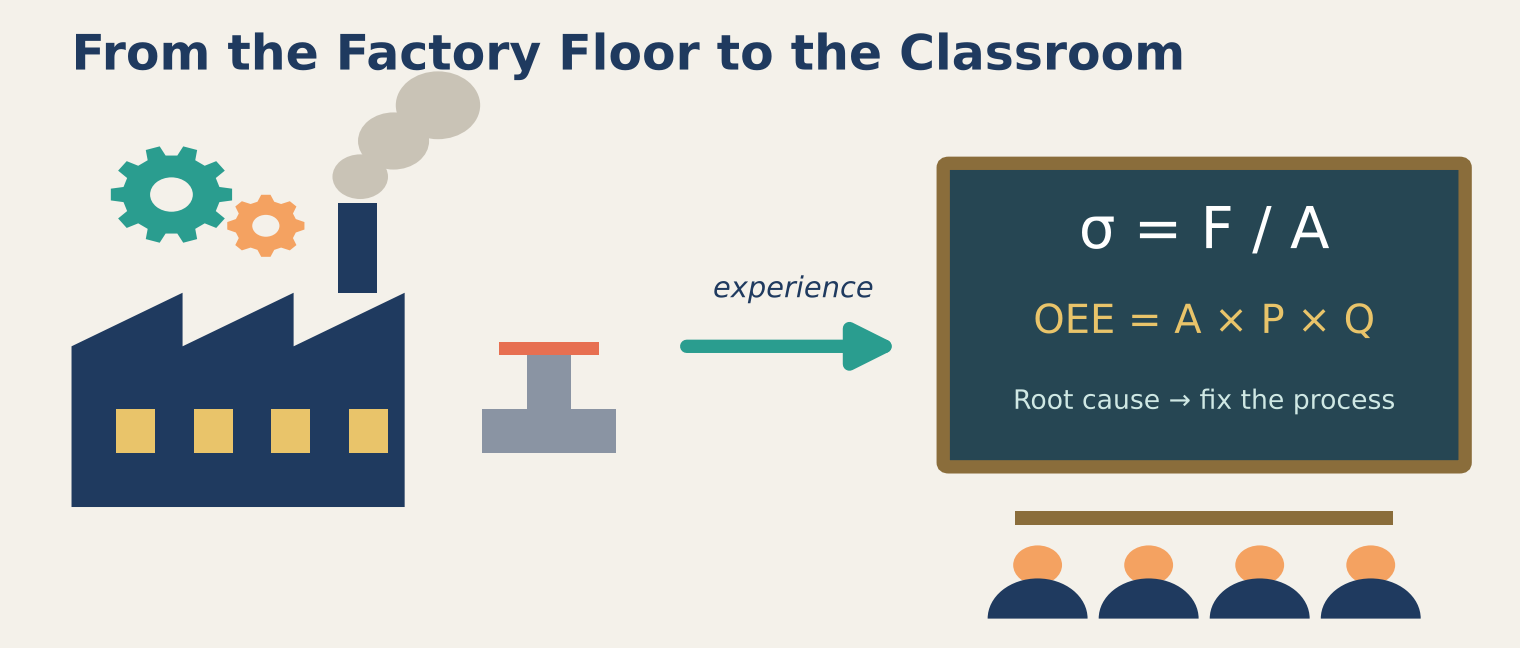
For six years my working day began with a production report. Today it begins with a lecture. The two jobs look very different, but the lessons I learned in a valve factory have changed the way I teach mechanical engineering, and I believe they can help our students start their careers better prepared.
Before I came to Gulf University, I worked at Cavagna Group, an Italian company that manufactures valves for LPG, alternative fuels, high-pressure and medical gases. I started as a Process Engineer, industrialising new valves together with the R&D team, and finished as Plant Production Manager, responsible for the daily performance of the plant. Before that, I had completed a PhD at the University of Brescia on an industrial project with an energy utility. So I have seen engineering from both sides: the side where we write equations, and the side where a machine stops at 3 a.m. and someone has to decide what to do.
When I moved into teaching, I asked myself a simple question: what did I wish I had known on my first day in the factory? The answer shapes almost everything I now do in the classroom.
1. The formula is the beginning, not the end
At university we learn that stress equals force divided by area. In a factory, nobody asks you to calculate stress for its own sake. They ask whether a part will survive, how much material you can save, or why ten pieces out of a thousand are cracking. The formula is the same, but the question is different.
In class I now try to end every topic with that second type of question. After we calculate the force on a submerged gate, we discuss what would happen if the gate were made thinner to save cost. After a tensile test, we look at how the yield strength decides the diameter of a real tie bar once a factor of safety is added. Students quickly notice that the “answer” is often a decision, not just a number.
2. Numbers that managers actually use
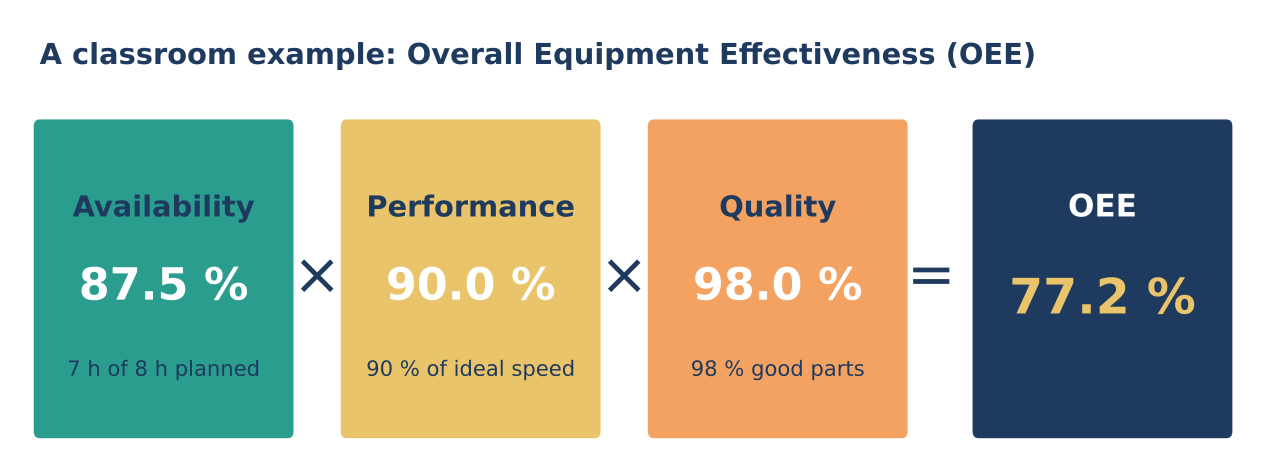
In production I lived with indicators such as OEE (Overall Equipment Effectiveness), which measures how much of a machine’s potential is really used, and PPM, the number of defective parts per million. These numbers were discussed every morning, and they drove investments, maintenance plans and sometimes difficult conversations.
Most engineering students have never heard of them, yet they will meet them in their first month in industry. I bring these indicators into examples and small projects: if a machine runs 7 hours out of a planned 8, produces at 90% of its ideal speed and makes 2% scrap, what is its OEE, and where should the engineer act first? It is simple arithmetic, but it teaches students to connect technical work with business results.
3. Mistakes are data
One of the most useful habits I learned from Lean manufacturing and the Toyota Way is to treat a problem as information, not as a failure. When a defect appeared on the line, we did not look for someone to blame; we looked for the root cause and changed the process so the defect could not come back.
I try to apply the same idea to assessment. A wrong answer in a quiz tells me something about how the topic was explained, not only about the student. After each quiz I look at which questions most students missed, and I change the next lecture accordingly. I also ask students to look at their own mistakes and classify them: a units error, a wrong formula, or a misunderstanding of the physics. That small exercise is a classroom version of root-cause analysis.
4. Make it visible and touchable
In a plant, people understand a problem much faster when they can see the part, the drawing and the machine together. Engineering students are no different. For my drawing classes I prepare cut-and-fold paper models of solids and of a lathe cutting tool, so students can hold the object while they sketch its views. In the fluids laboratory we use a dead-weight pressure tester with a worksheet that asks students to calculate the pressure from the weights and compare it with the gauge reading, exactly as a technician would during a calibration.
These activities take more preparation than a slide, but they turn an abstract idea into something students remember.
5. Communication is an engineering skill
The most technically brilliant engineer I worked with was not always the most effective one. The people who moved projects forward were those who could explain a problem clearly to an operator, a supplier and a manager, often in a few minutes.
For this reason I ask students to present their results briefly and to write short technical reports, not only to solve problems on paper. Being able to say “the pump fails because the seal is undersized, and here is the cost of fixing it” is worth as much as the calculation behind it.
What this means for our students
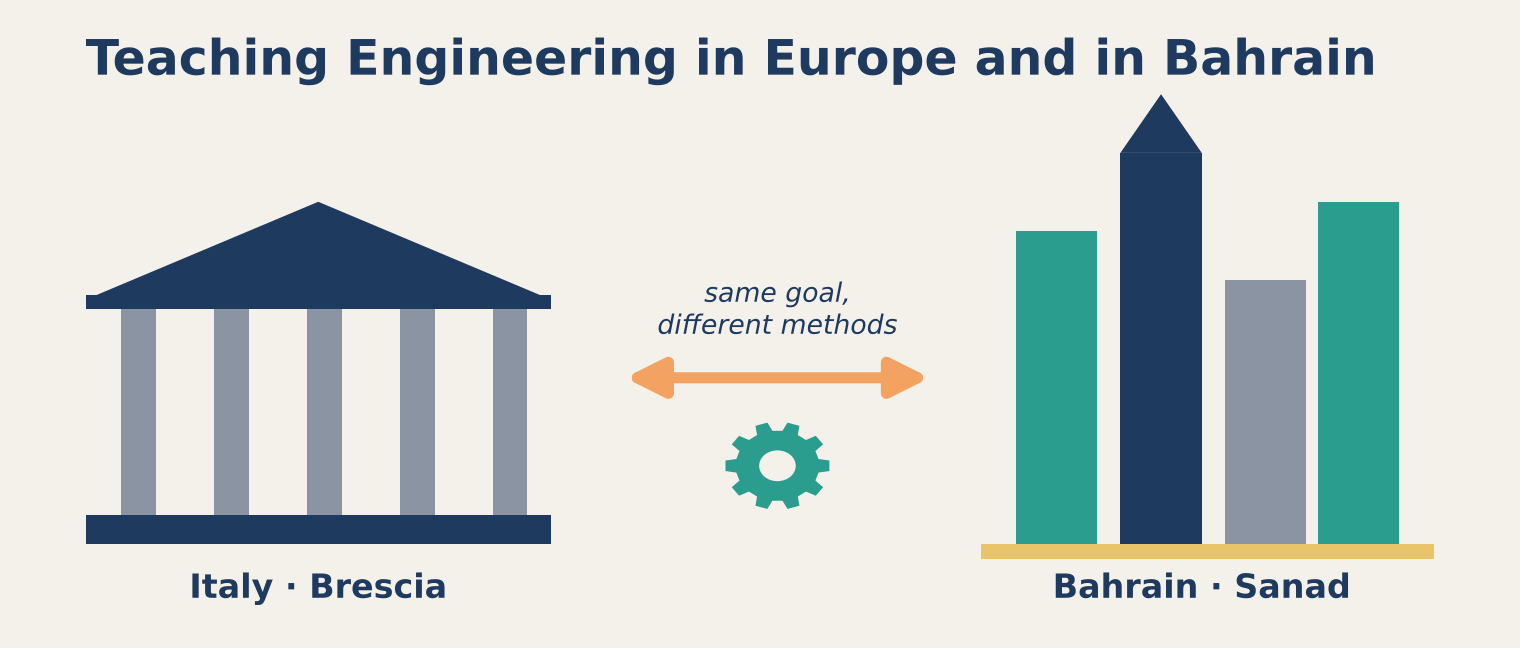
Industrial experience does not replace theory; it gives theory a purpose. My goal is that a Gulf University graduate who enters a plant in Bahrain or anywhere in the region recognises the language on the first day: KPIs, root cause, factor of safety, cost of a defect. Bahrain’s industrial base, from aluminium and petrochemicals to oil and gas services and manufacturing, needs engineers who can do the calculation and also understand why it matters.
If there is one message I would give to students, it is this: every equation you learn is a tool that someone, somewhere, is using right now to make a decision. Learn it well, and always ask what decision it helps you make.
About the author
Dr. Ahmad Assi is an Assistant Professor of Mechanical Engineering at Gulf University, Bahrain. He holds a PhD in Mechanical and Industrial Engineering from the University of Brescia, Italy, and is a certified Project Management Professional (PMP). Before joining Gulf University he spent six years at Cavagna Group, an Italian manufacturer of LPG and high-pressure gas valves, where he progressed from Process Engineer to Plant Production Manager.

Last Updated: 3 June 2026