
Why Teaching the Principles of Engineering Economics and Management Is Important for Interior Design Students
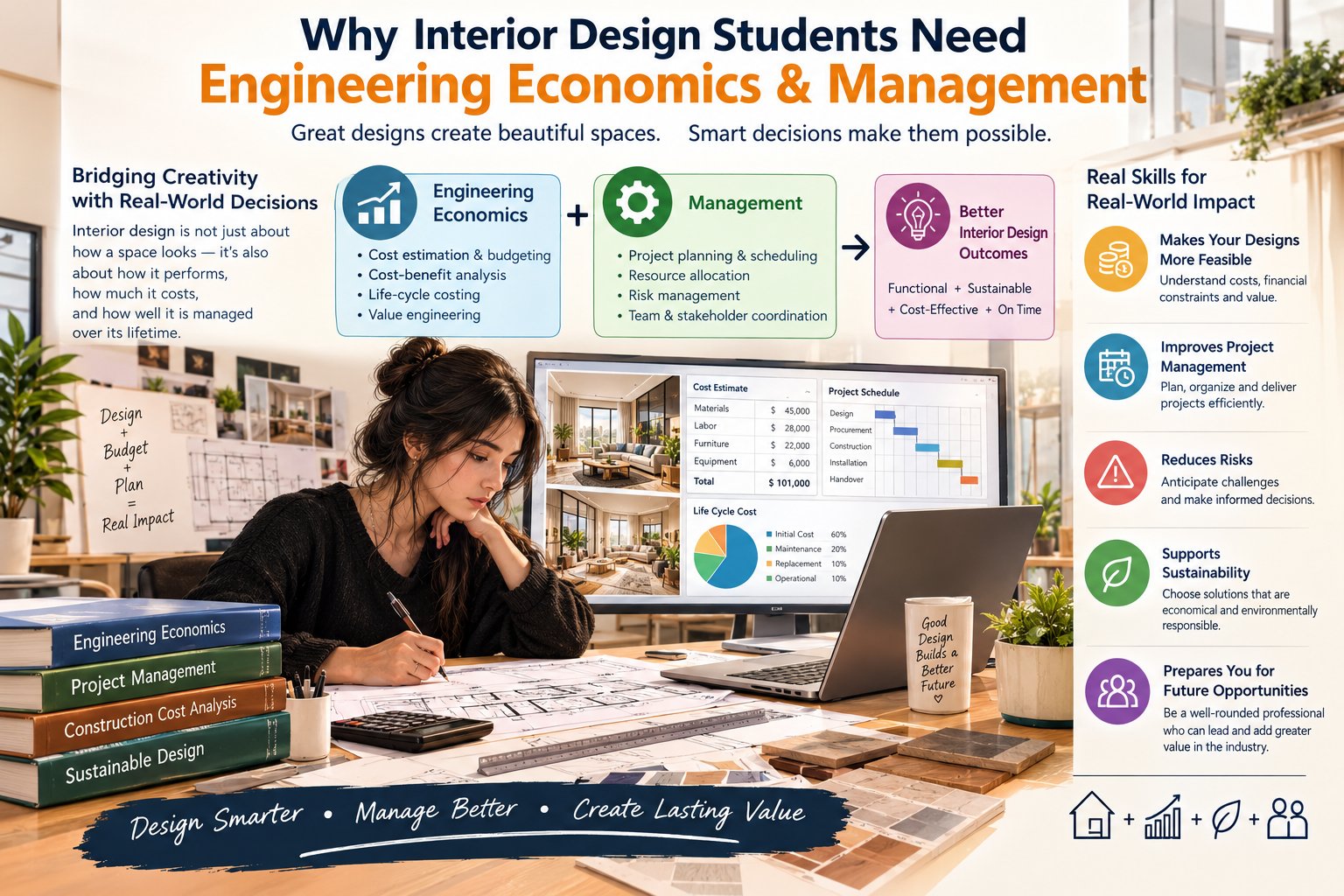
The students of interior design demand structured planning, cost analysis, and efficient resource management. This is where the principles of engineering economics and management play a transformative role. By integrating these disciplines into the design process, architects and designers can achieve interiors that are not only visually appealing but also economically viable, sustainable, and functionally efficient.
1. Engineering Economics
Engineering economics emphasizes evaluating alternatives and making decisions based on financial and economic analysis. When applied to interior design, it provides several key advantages:
- Cost-Benefit Analysis: Designers can compare different materials, finishes, and technologies to determine which option offers the best balance between cost and long-term value. For instance, choosing between natural wood flooring and engineered alternatives requires assessing durability, maintenance costs, and aesthetic impact.
- Lifecycle Costing: Beyond initial expenses, engineering economics considers the long-term costs of maintenance, energy consumption, and replacement. This ensures that design choices remain sustainable and economical over time.
- Resource Optimization: By analysing budgets and financial constraints, designers can minimize waste and allocate resources more effectively, ensuring that every dollar spent contributes to the project’s overall value.
2. Engineering Management
Engineering management focuses on organizing processes, coordinating teams, and ensuring projects meet their objectives. In interior design, this discipline enhances efficiency and quality through:
- Project Scheduling and Time Management: Structured planning prevents delays and ensures that design and construction phases progress smoothly.
- Team Coordination: Interior projects often involve architects, engineers, electricians, and contractors. Engineering management ensures collaboration among these professionals, reducing conflicts and miscommunication.
- Quality Assurance: Establishing clear standards for materials and workmanship guarantees that the final product meets both functional and aesthetic expectations.
The true strength lies in combining engineering economics with engineering management. Together, they create a holistic framework for decision-making and execution. Economics provides the financial rationale for design choices, and management ensures those choices are implemented efficiently and within the project’s constraints.
For example, if a designer selects energy-efficient lighting based on economic analysis, engineering management ensures proper installation, adherence to safety standards, and timely completion.
3. Impact on Sustainability and Innovation
Economic analysis encourages the use of eco-friendly materials that reduce environmental impact, while management ensures these materials are integrated seamlessly into the project. At the same time, a well-managed project environment allows designers to experiment with new technologies and creative solutions without exceeding budgets or timelines.
Interior design students gain significant benefits when they apply engineering economics and engineering management principles to their projects. These disciplines provide a structured framework that enhances both creativity and practicality.
4. Benefits for Interior Design Students
- Financial Awareness: Engineering economics teaches students to evaluate costs, benefits, and long-term value. This helps them make smarter choices about materials, finishes, and technologies, ensuring designs are not only beautiful but also cost-effective.
- Resource Optimization: Students learn to minimize waste and allocate budgets efficiently. This skill is crucial when working with limited resources or client constraints.
- Project Management Skills: Engineering management equips students with tools to plan, schedule, and coordinate design projects. They gain experience in handling deadlines, teamwork, and quality control — skills that are highly valued in the professional world.
- Sustainability Focus: By combining economic analysis with management strategies, students can prioritize eco-friendly materials and energy-efficient solutions, aligning their designs with modern sustainability standards.
- Professional Readiness: These principles prepare students for real-world challenges, bridging the gap between academic learning and industry practice. They become capable of delivering designs that balance aesthetics, functionality, and financial feasibility.
Conclusion
Interior design students who embrace engineering economics and management principles develop a holistic approach to design. They learn to deliver projects that are efficient, sustainable, and economically sound.

Last Updated: 3 June 2026