
Internal Control and Fraud Detection
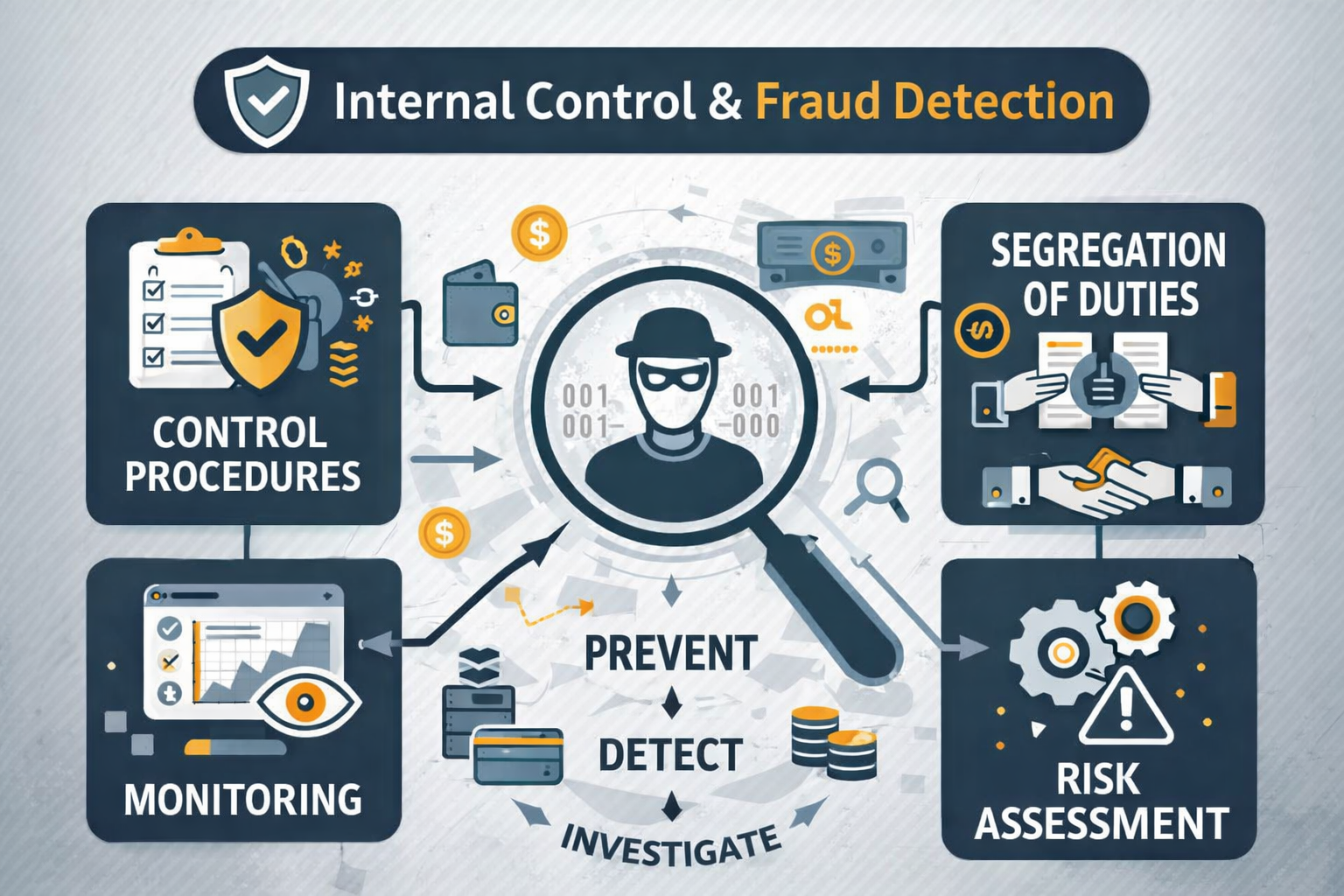
Explore how internal control systems and fraud detection frameworks help organizations prevent, detect, and investigate financial irregularities through control procedures, segregation of duties, monitoring, and risk assessment.
In today’s complex and fast-moving business environment, organizations across Bahrain and the GCC face growing challenges related to financial fraud, operational risks, and regulatory compliance. The ability to establish strong internal controls and effective fraud detection mechanisms has become a fundamental requirement for institutional governance and financial integrity.
Internal controls are the processes, policies, and procedures that organizations implement to ensure the reliability of financial reporting, compliance with applicable laws and regulations, and the effectiveness and efficiency of operations. When properly designed and implemented, these controls serve as the first line of defense against fraud and financial mismanagement.
The Five Pillars of Internal Control and Fraud Detection
Effective internal control systems are built on a set of interconnected components that work together to safeguard organizational assets and ensure accountability. Understanding these pillars is essential for any institution seeking to strengthen its governance framework.
Control Procedures
Control procedures are the specific policies and practices that organizations put in place to mitigate identified risks. These include authorization requirements, approval workflows, verification processes, and reconciliation activities. Well-designed control procedures ensure that transactions are properly authorized, accurately recorded, and appropriately documented.
Segregation of Duties
Segregation of duties is one of the most critical principles in fraud prevention. By dividing key financial responsibilities among different individuals, organizations reduce the risk of errors and fraudulent activities going undetected. No single person should have control over all aspects of a financial transaction — from authorization to recording to custody of assets.
Monitoring
Ongoing monitoring is essential to ensure that internal controls continue to operate effectively over time. This includes regular reviews of financial reports, performance indicators, and compliance metrics. Organizations that invest in continuous monitoring are better positioned to identify control weaknesses and emerging fraud risks before they escalate into significant problems.
Risk Assessment
Risk assessment involves identifying, analyzing, and prioritizing potential threats to an organization’s financial integrity and operational effectiveness. A robust risk assessment framework allows institutions to allocate resources effectively, focus control efforts on high-risk areas, and adapt their fraud detection strategies to evolving threats.
Prevention, Detection, and Investigation
A comprehensive fraud management approach integrates three key activities: prevention through strong internal controls and awareness programs, detection through monitoring systems and anomaly identification, and investigation through structured response protocols when irregularities are identified.
Why Internal Controls Matter for Organizations in Bahrain and the GCC
As Bahrain continues to develop its position as a regional financial and business hub, the importance of robust internal controls cannot be overstated. Organizations operating in the GCC face unique challenges including rapid digital transformation, evolving regulatory requirements, and increasing complexity in financial operations.
Strong internal control systems help organizations:
- Protect assets and reduce financial losses from fraud or error
- Ensure compliance with regulatory requirements and industry standards
- Improve the accuracy and reliability of financial reporting
- Strengthen stakeholder confidence and institutional credibility
- Support strategic decision-making through reliable data
The Role of Education in Building Fraud Awareness
Universities and educational institutions play a vital role in preparing future business professionals to understand and implement effective internal control and fraud detection systems. By integrating governance, risk management, and compliance topics into academic programs, institutions help graduates enter the workforce with the knowledge and skills needed to contribute to organizational integrity from day one.
Gulf University continues to emphasize the importance of practical, industry-relevant education that prepares students for the real challenges they will face in modern business environments — including the critical area of internal controls and fraud prevention.
Conclusion
Internal control and fraud detection are not optional components of good governance — they are essential foundations upon which organizational trust, financial integrity, and long-term sustainability are built. Through effective control procedures, proper segregation of duties, continuous monitoring, and comprehensive risk assessment, organizations can create a robust defense against fraud while building a culture of accountability and transparency.
As the business landscape continues to evolve across Bahrain and the GCC, investing in strong internal control systems remains one of the most important decisions any organization can make.


Last Updated: 3 June 2026