April 10, 2026
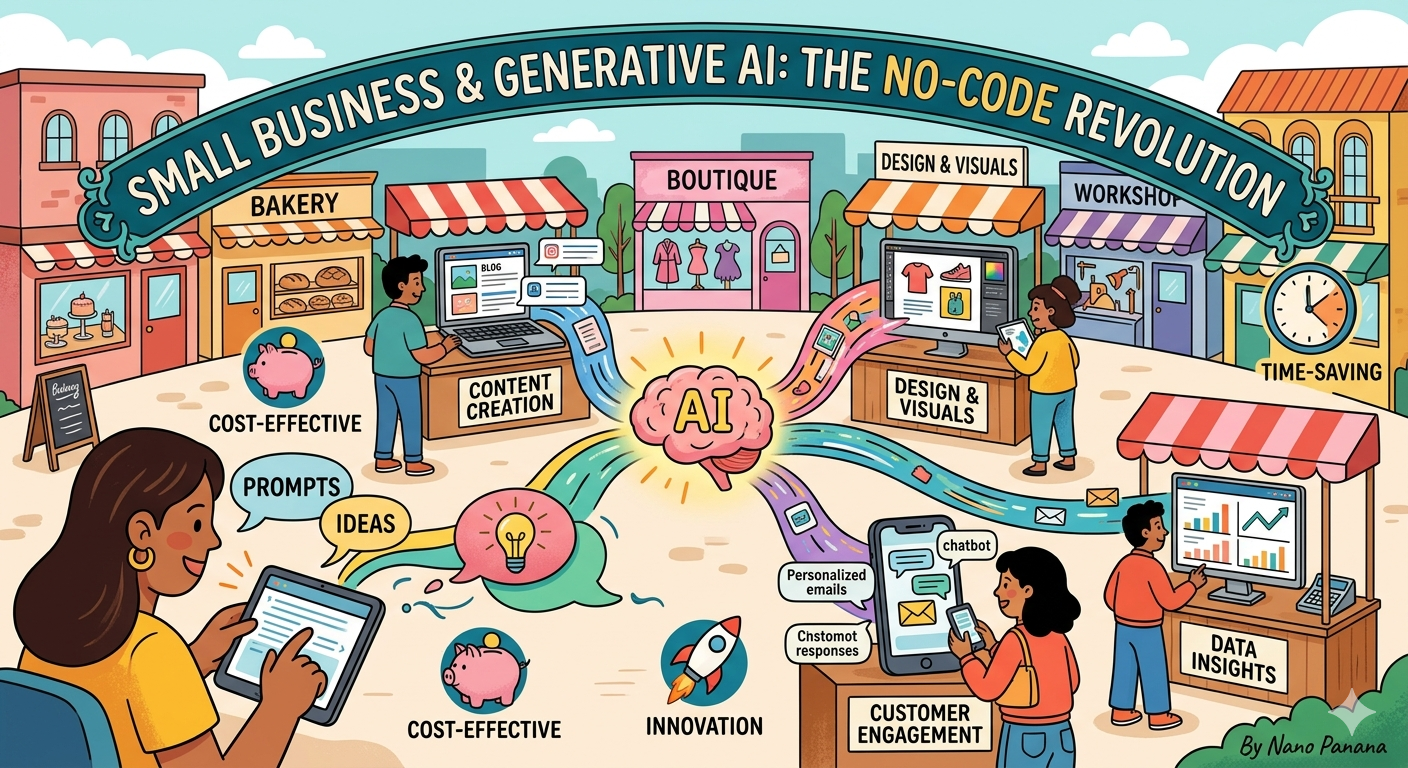
Generative AI for Small Business: No Code, Big Results
Dr. Mohammed Alzoraiki


Can digital transformation help small and medium-sized media organizations achieve genuine corporate sustainability? Explore how data, AI, and digital platforms are reshaping the media business model — and what it takes for Bahrain's SME media sector to compete, grow, and endure.
The advancements in digital technology have contributed to a radical transformation in the field of journalism and media. This has compelled media institutions to adapt quickly to these changes and attempt to integrate into the newly emerging digital environment with its evolving landscape. Harliantara, in a study published in the Romanian journal Tekneum of Applied Sciences and Technology titled “Digital Technology Adaptation in Media Industry Management: A Literature Study” (2025), indicated that the adoption of digital technologies within media institutions “has led to changes in business models, consumer interaction strategies, and the adoption of digital tools for operational and strategic decision-making, enabling media companies to respond more effectively to the evolving digital landscape.”
Undoubtedly, small and medium-sized media organizations (SMEs) face greater challenges than larger media organizations in implementing digital transformation and integrating sustainability into their professional practices. These challenges include limited financial resources, a lack of capacity for innovation, and the absence of clear and specific roadmaps. This constitutes a major obstacle hindering these organizations' ability to undergo digital transformation, which is not merely about adopting new tools but rather a comprehensive strategy to enhance efficiency, innovation, and long-term viability.
Sustainable digital transformation in SMEs is not limited to simplifying processes and increasing efficiency; it also fosters innovation, strengthens the ability to meet future challenges, facilitates data-driven decision-making, and reduces negative environmental and social impacts. This paves the way for achieving a sustainable competitive advantage in the digital age. Furthermore, integrating sustainability into SME practices enhances the organization's reputation and attracts clients and investors who value environmental responsibility.
The question is: can digital transformation in SMEs lead these organizations to genuine corporate sustainability? Digital transformation has become one of the biggest challenges facing organizations in general — industrial, commercial, service-oriented, and especially media organizations. It encompasses the use of digital tools, artificial intelligence, big data, and online publishing technologies to enhance media operations.
Johan Cruso, in his study “Digital Transformation: Redefining Business in the Digital Age,” published in the Global Media Journal, explains that the term refers to “the profound changes that organizations undergo by integrating digital technologies into all aspects of their operations.” Gregory Vial, in “Understanding digital transformation: A review and a research agenda,” published in the Strategic Information Systems Journal, defines it as “a process in which digital technologies bring about radical changes, prompting strategic responses from organizations seeking to transform their value creation pathways.”
Numerous studies indicate that generative artificial intelligence (AI) heralds a potential era of transformation in journalism and media content. This transformation encompasses changes in news production processes, content delivery, and journalistic ethics. Alim Febri Soni and others, in their study “Transforming Digital Newsrooms: A Systematic Review of the Impact of AI on Journalistic Practices, News Narratives, and Ethical Challenges,” explain that “AI is revolutionizing how news is produced, distributed, and consumed.” They add that this phenomenon not only “changes traditional journalistic practices but also challenges our understanding of the role of journalists, the quality of information, and the relationship between media organizations and their audiences.”
The digital transformation of media is linked to achieving institutional sustainability. Digital transformation is not merely a technological upgrade; it has become a strategic framework that shapes business models and enhances organizations' ability to thrive in changing competitive environments. By leveraging digital technologies — such as data analytics, AI, and digital publishing platforms — organizations can improve operational efficiency, reduce operating costs, and accelerate decision-making, all essential elements for economic sustainability.
Digital transformation also contributes to organizational sustainability by enabling continuous innovation and the development of media products and services that are more aligned with audience needs, thereby enhancing user loyalty and ensuring stable revenue streams. Furthermore, it allows for greater flexibility in resource management and crisis adaptation, thus strengthening organizations' long-term resilience.
A growing body of scholarly literature on digital transformation in SMEs confirms that digitalization is no longer a technological option but a strategic necessity for enhancing competitiveness and sustainability. Recent studies indicate that the success of digital transformation in these enterprises depends on a set of interconnected factors, most notably the readiness of the digital infrastructure, the availability of technical skills, leadership support, and the ability to adopt innovative business models. SMEs possess greater organizational flexibility compared to large enterprises, granting them a faster ability to adapt to digital transformations, despite limited resources.
There is significant interest in supporting small and medium enterprises (SMEs) in the Kingdom of Bahrain. A press report published in Akhbar Al Khaleej newspaper on February 26, 2026, revealed that the total number of active commercial registrations for SMEs in Bahrain is 85,700, representing 93.4% of all active commercial registrations — including SMEs operating in the media sector — according to data from the Ministry of Industry and Commerce.
SMEs operating in the media sector are among the most active in Bahrain. Official data indicates that SMEs in Bahrain employ nearly half of all Bahrainis working in the private sector. According to the Information and eGovernment Authority, the number of Bahrainis working in these enterprises reached 46,300 by the second quarter of 2025, representing annual growth of 4.3% compared to 2024.
While official statistics on SMEs operating in the media sector are unavailable, the Higher Education Council's directives encourage educational institutions to guide students toward starting their own businesses after graduation. The Arabian Gulf University has capitalized on these directives by introducing several courses that support this path, including innovation, sustainability, entrepreneurship, and small business management. The university boasts several graduates who have successfully established their own businesses.
Flexible financing, training grants, and business development consulting that accelerate digital transformation.
Sharia-compliant financing, training, and incubation supporting SME growth and global market access since 1992.
The first specialized microfinance bank in Bahrain, empowering entrepreneurs, women, and youth without complex guarantees.
Implements the global “Bahraini Model” for entrepreneurship, technology investment, and green/blue economy partnerships.
Small and medium-sized media enterprises in the Kingdom of Bahrain are urged to take greater advantage of the support provided by such entities and to prioritize digital transformation to compete, grow, and achieve sustainability. Digital transformation in Bahrain is not merely an individual initiative but rather an integral part of a national strategy linked to innovation, economic sustainability, and the development of the digital economy.
Digital transformation in SMEs helps address the challenges they face, enabling them to remain competitive, achieve growth, and increase efficiency at minimal cost. Its importance lies in its ability to expand audience reach and enhance the efficiency of editorial and administrative processes. Through digital platforms and social media, these enterprises can overcome geographical limitations and reach broader and more diverse audience segments, with the potential for direct and immediate interaction.
Digital transformation contributes to the development of content management through advanced digital systems that allow for the efficient and rapid organization and dissemination of media materials. It also facilitates the use of data analytics tools to understand audience behavior and interests, which supports more accurate editorial decisions. Furthermore, this transformation opens the door to adopting flexible digital subscription models that contribute to diversifying revenue streams and achieving greater financial sustainability.
Numerous field experiences indicate that digital transformation has become a crucial tool for developing media institutions. In Bahrain, the Ministry of Information launched initiatives to utilize AI in media content production, and institutions such as Al Bilad newspaper adopted digital models to enhance audience engagement. Internationally, the Associated Press demonstrates how automation can boost productivity, while platforms like MENA Newswire offer an advanced model for using data and AI to expand media reach.
Undoubtedly, the constraints and challenges facing small and medium-sized media organizations limit their ability to adopt digital transformation processes and delay their continued competitiveness, growth, and sustainability. Limited financial and human resources are among the most significant challenges, as investing in digital technologies and developing infrastructure requires high costs that may not be commensurate with the capabilities of these organizations.
A study published in the Journal of Marketing & Social Research by Joshi et al. (2025) indicates that digital transformation is associated with challenges related to “the cost of transformation, skills mismatch, and data security concerns.” Resistance to change and a lack of digital skills among employees also emerge as major obstacles. Rachmawati (2024), in the Journal of Multidisciplinary Research and Innovation, demonstrates that resistance to change is often linked to unclear objectives and inadequate training.
These institutions also face technological risks, including data security, the complexity of digital systems, and weak infrastructure. Equally important is the risk of losing institutional identity or compromising content quality due to excessive reliance on technology. Recent literature indicates that digital transformation may lead institutions to prioritize speed and productivity at the expense of professional depth and editorial standards.
The success of digital transformation requires striking a delicate balance between adopting technology and preserving professional values and media identity.
Digital transformation contributes to enhancing the corporate sustainability of small and medium-sized media organizations by improving operational efficiency and reducing costs, supporting long-term financial sustainability. Adopting digital technologies — such as automation, content management systems, and intelligent analytics — reduces reliance on traditional resources and accelerates production processes. Vial (2019), in the Journal of Strategic Information Systems, explained that digital transformation brings about “fundamental improvements in performance and efficiency by reshaping organizational processes and reducing operational costs.”
Digital analytics and direct audience interaction enhance organizations' ability to make more accurate strategic decisions. Verhoef et al. (2021), in the Journal of Business Research, indicate that the use of digital data contributes to “improving understanding of customer behavior and supporting innovation in business models.” Kane et al. (2019), in the MIT Sloan Management Review, confirm that organizations that strategically adopt digital transformation achieve “greater organizational agility and greater adaptability to market changes,” enhancing their chances of survival and continuity.
Digital transformation is no longer a complementary option but an imperative for small and medium-sized media organizations to ensure their survival and growth in a rapidly changing and highly competitive media environment. Its success requires a comprehensive strategic vision that includes investing in technology, equipping human resources with digital skills, ensuring business continuity, and fostering a culture of innovation within the organization.
Westerman et al. (2014), in the MIT Sloan Management Review, indicate that organizations achieving successful digital transformation are those that combine “digital capabilities with transformational leadership.” Bharadwaj et al. (2013), in MIS Quarterly, confirm that an effective digital strategy “reshapes business models and enhances the competitive value of organizations.”
The key recommendation is that small and medium-sized media organizations should develop clear and well-defined strategic digital plans based on measurable objectives and specific performance indicators, while adopting continuous mechanisms for performance monitoring and results evaluation. Such an approach not only improves operational efficiency but also ensures institutional sustainability and enhances the ability to adapt and innovate amidst rapid digital transformation.
Dr. Abdullah Altaher
Faculty Member — Gulf University
Last Updated: 11 May 2026