March 26, 2026
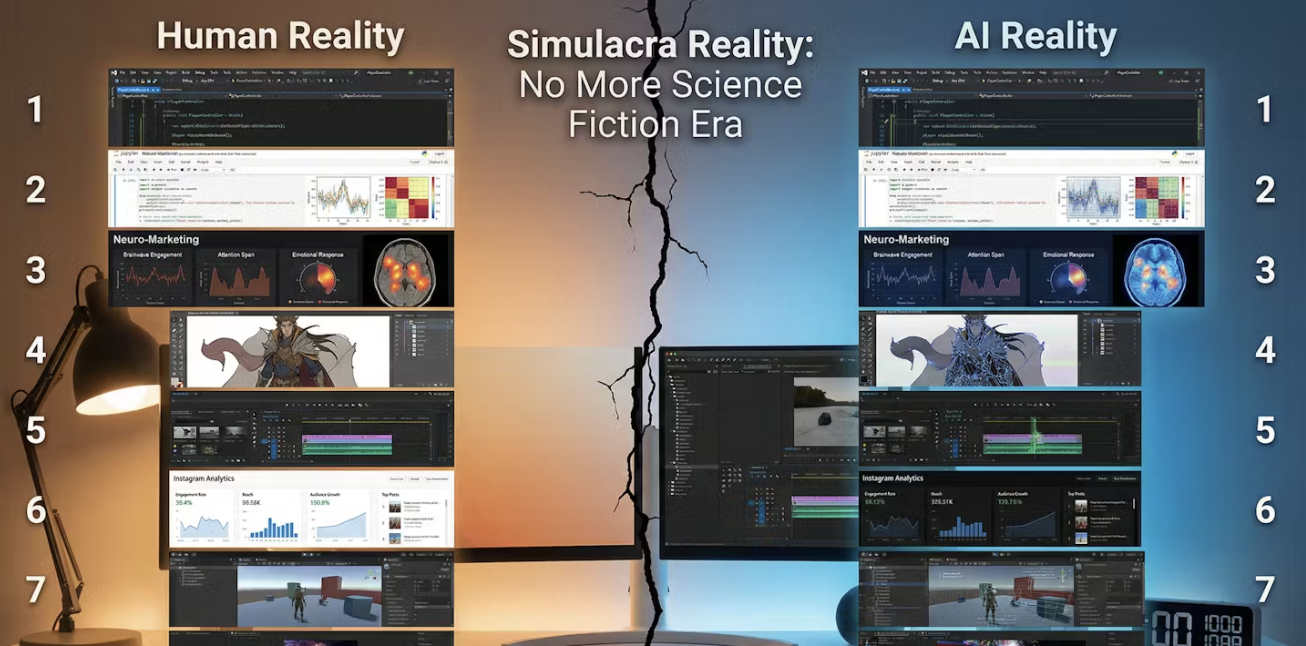
Simulacra Reality: No More Science Fiction Era
Kareem Mohamed

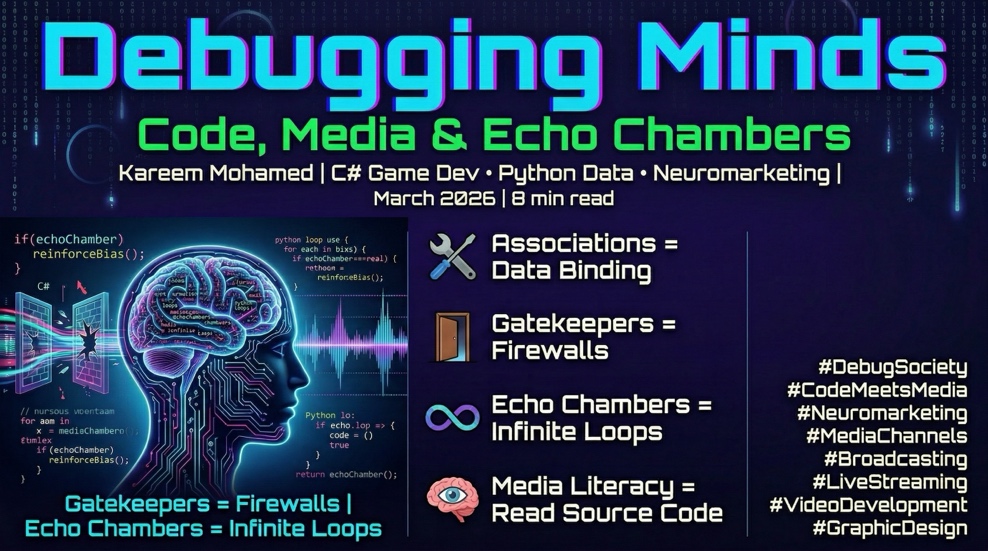
What if we could debug human communication like software code? This blog explores parallels between programming logic and media echo chambers to reveal how both systems shape our digital lives.
What if we could understand human communication and media systems the way we understand software architecture? Just as we debug code to fix logic errors, we can debug communication errors in society. For someone bridging C# programming, Python data analytics, and marketing strategy, humans and machines operate far more similarly than we think.
In programming, systems rely on classes, functions, and conditions; in media communication, these become roles, behaviors, and cultural codes. Both depend on rules, inputs, and outputs. A broken loop—in code or social media—fails the system, creating infinite repetitions or echo chambers.
Neuromarketing reveals humans respond to stimuli, patterns, and repetition like neural networks. Notifications, color palettes, and ads act as emotional code. Association in psychology mirrors data binding in programming, persisting until reprogrammed.
Software firewalls filter inputs; media gatekeepers—editors, influencers, algorithms—do the same. Echo chambers function like recursive loops, reinforcing biases without new input. Human intervention is needed to break these cycles.
Programming errors trigger exceptions; communication fails silently. Thinking like a programmer decodes failures: bias as hardcoded conditions, disinformation as corrupted data, media literacy as reading source code. Societies need ethical testing like unit testing.
Technology’s UI is a cultural statement; social programming builds belief interfaces. Emotional UX in marketing determines idea spread, like app design.
Interdisciplinary thinking bridges code and culture. To program the future responsibly, we must debug biases in our systems and ourselves. Professionals mastering emotional syntax will shape algorithmic communication effectively.
To program the future responsibly, we must debug biases in our systems and ourselves.
Kareem Mohamed
Lecturer, Communication and Media Technologies — Gulf University
Last Updated: 09 Apr 2026