
June 7, 2026
Job Stability in Private Institutions and Its Impact on Institutional Efficiency and Productivity
Dr. Hayam El Sehmawy

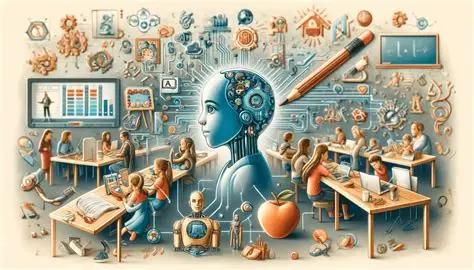
Artificial intelligence has reshaped modern life in unprecedented ways — but its rapid integration into homes raises important questions about children’s cognitive development and the stability of marital relationships. A balanced look at both the opportunities and the risks.
Artificial intelligence (AI) has become one of the most transformative technologies of the twenty-first century. Its rapid integration into education, communication, healthcare, and daily social interaction has reshaped modern life in unprecedented ways. While AI offers remarkable opportunities for efficiency and innovation, it also raises important social and psychological concerns, particularly regarding children’s cognitive development and the stability of marital relationships. The increasing dependence on AI-driven technologies requires a balanced evaluation of both their advantages and potential negative consequences.
Children today are growing up in a highly digital environment dominated by smart devices, virtual assistants, educational applications, and algorithm-driven content. AI-powered educational tools can significantly enhance learning experiences by personalizing educational content according to the child’s abilities, pace, and interests. Adaptive learning systems help improve academic performance and provide interactive learning opportunities that were previously unavailable.
However, excessive reliance on AI technologies may negatively affect children’s intellectual and emotional growth. Continuous exposure to instant digital responses can reduce patience, critical thinking, and problem-solving skills. Some studies suggest that overdependence on smart devices may weaken memory retention and reduce children’s ability to engage in deep analytical thinking. Furthermore, prolonged interaction with AI systems may decrease direct human communication, leading to social isolation and weaker emotional intelligence.
Another major concern relates to the influence of AI algorithms on children’s behavior and attention span. Social media platforms and entertainment applications rely on recommendation systems designed to maximize user engagement, often exposing children to addictive digital environments. This may contribute to distraction, reduced concentration, sleep disorders, and behavioral problems. Consequently, parents and educators must ensure balanced technology use and encourage real-world social interaction alongside digital learning.
The influence of AI extends beyond childhood development and increasingly affects family structures and marital relationships. Modern couples rely heavily on digital communication platforms, smart home systems, and AI-based social media algorithms that shape daily interaction patterns. Although technology may facilitate communication and simplify household management, it can also create emotional distance between spouses.
One of the major challenges is the excessive use of smartphones and digital platforms, which may reduce face-to-face communication and emotional intimacy. AI-driven social media algorithms are specifically designed to capture attention for prolonged periods, often leading individuals to prioritize virtual engagement over direct family interaction. This digital distraction may contribute to misunderstandings, emotional neglect, and declining relationship satisfaction.
Moreover, AI technologies can indirectly influence trust and privacy within marriages. Recommendation algorithms and online interactions may expose individuals to inappropriate content or create unrealistic expectations regarding relationships and lifestyles. In some cases, excessive virtual interaction may weaken emotional bonds between spouses and increase psychological stress within the family environment.
Despite these concerns, AI can also provide positive contributions to marital relationships when used responsibly. AI-based counseling applications, mental health platforms, and family management tools may help couples improve communication, organize responsibilities, and reduce daily stress. Therefore, the impact of AI on marriage largely depends on the manner and extent of its use.
AI tutors personalize content to a child’s pace, ability, and interests.
Overdependence can weaken patience, memory, and deep analytical thinking.
Attention-capturing algorithms can crowd out face-to-face family interaction.
Used wisely, AI counseling and family tools can strengthen communication and reduce stress.
A balanced approach is essential to ensure that technology serves humanity without replacing genuine emotional and social interaction.
Artificial intelligence represents a powerful technological advancement with significant social implications. While AI offers important educational and practical benefits, uncontrolled dependence on digital technologies may negatively affect children’s cognitive development and weaken human relationships within families. A balanced approach is therefore essential to ensure that technology serves humanity without replacing genuine emotional and social interaction. Governments, educational institutions, and families should cooperate in developing ethical guidelines and awareness programs that promote healthy and responsible AI usage in modern society.
Dr. Hayam El Sehmawy
Associate Professor of Civil Law — Gulf University, Kingdom of Bahrain
Last Updated: 08 Jun 2026